
RFID Readers & Scanners: High-Performance HF & UHF Hardware Solutions
JN RFID provides rugged fixed, handheld, and desktop RFID reading terminals engineered for inventory control, logistics, retail, and secure access systems that pair seamlessly with RFID cards. Our hardware features global frequency coverage, seamless SDK integration, and reliable multi-tag processing.
- Global Frequency Coverage
Complete HF & UHF frequency coverage for international compliance - Versatile Form Factors
Industrial fixed, mobile handheld, and compact desktop form factors - SDK Integration
Turnkey SDK and API documentation for swift middleware integration - OEM/ODM Services
Flexible OEM/ODM services backed by direct scale manufacturing
Bulk Sourcing & Technical Selection Support: WhatsApp +86 13954091520 | info@jnrfid.com
Enterprise RFID Readers & Scanners Product Matrix
Map the core hardware families so your deployment team can quickly select the right hardware architecture for your operational environment. Explore our full range of RFID hardware products designed for enterprise deployment. As an established hardware supplier, JN RFID engineers fixed, handheld, and desktop systems engineered for long-term read stability, high throughput, and seamless enterprise system integration.
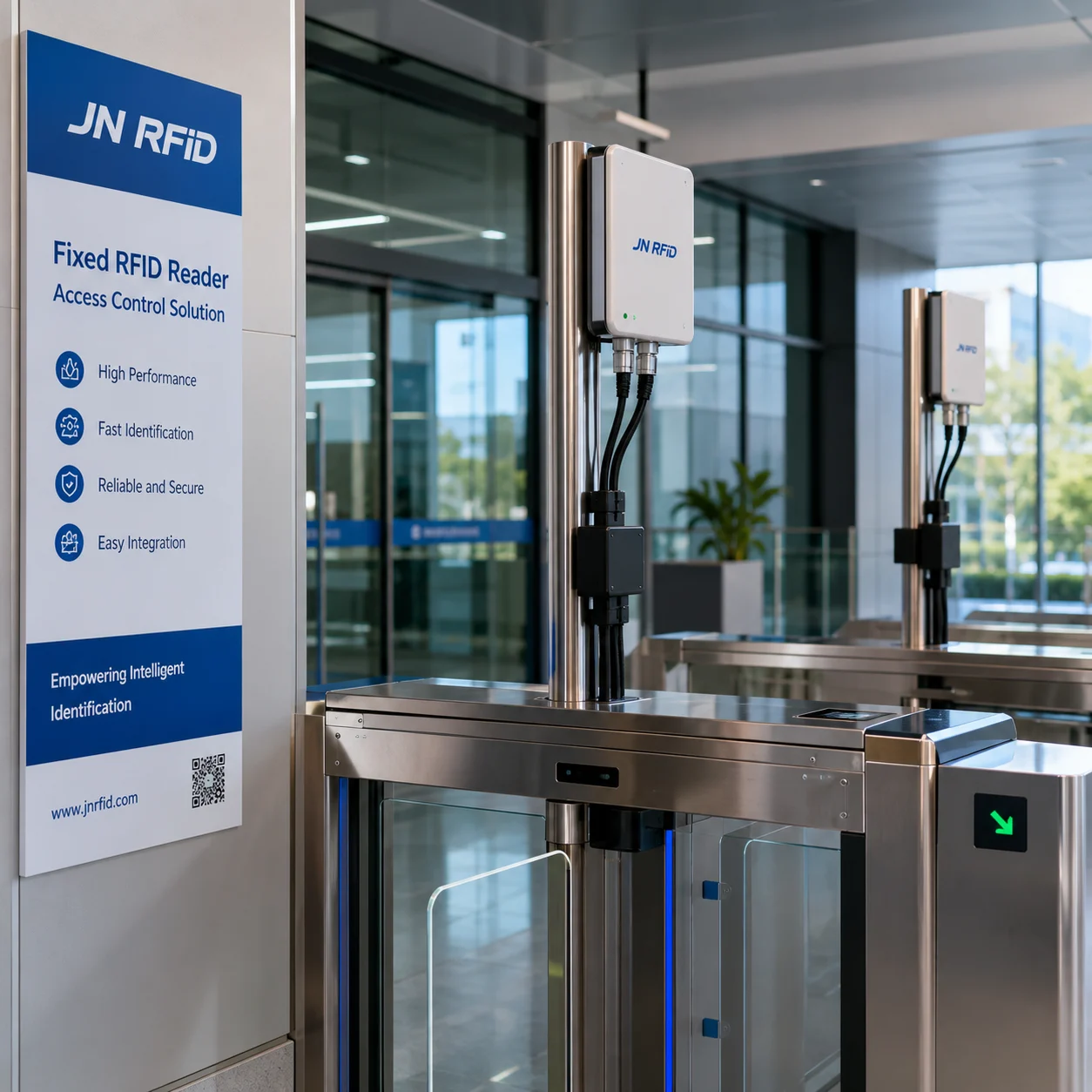
Fixed RFID Readers
Built for permanent installation at automated access control portals, warehouse dock doors, and high-speed production conveyor lines.
Supports external multi-port antenna expansion to maximize regional read zones and eliminate dead angles.
Includes industrial data interfaces such as Ethernet, RS485, Wiegand, and Power over Ethernet (PoE) for stable networking.
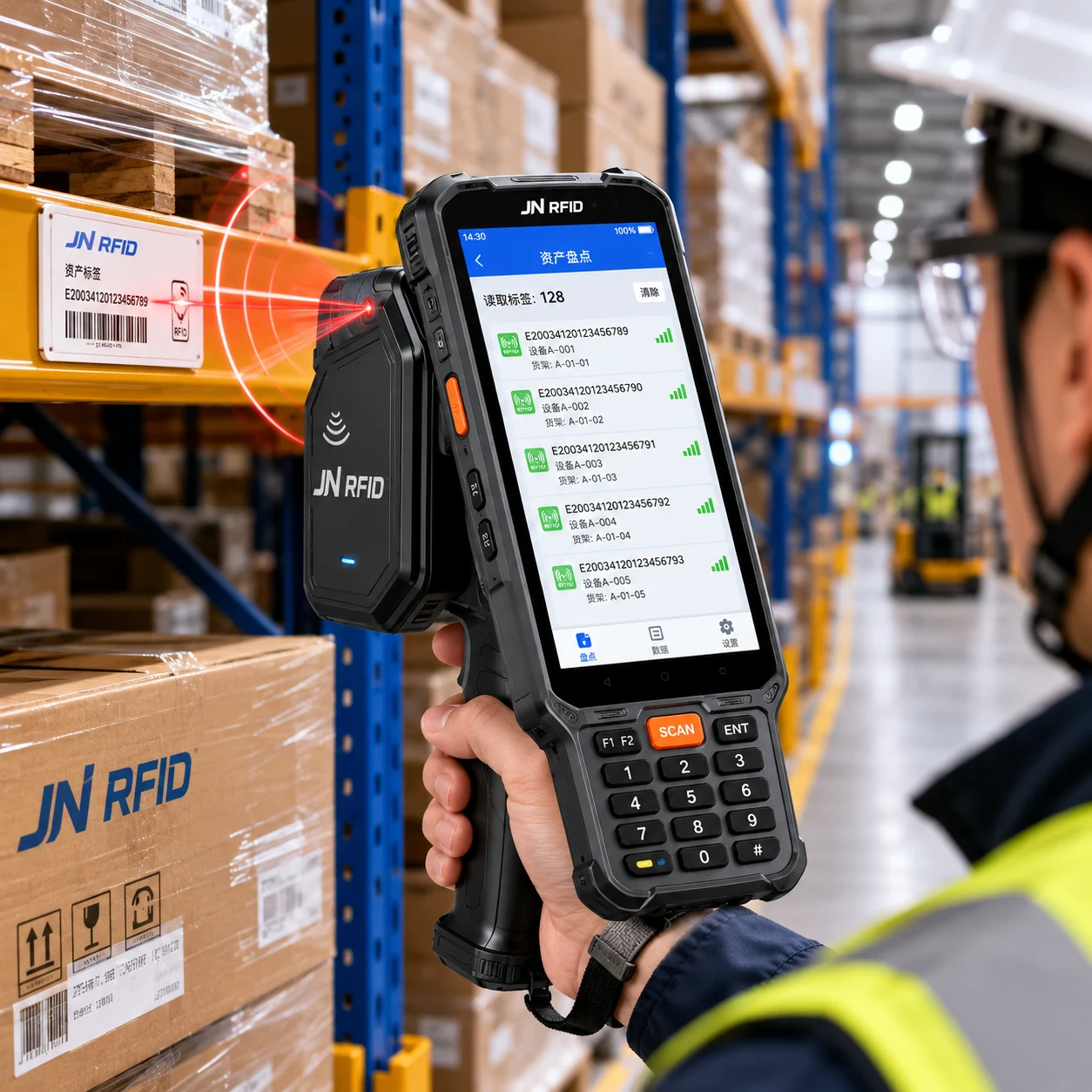
Handheld RFID Scanners
Engineered for mobility-driven workflows including warehouse inventory cycle counting, asset auditing, and field-based security patrols.
Combines high-sensitivity UHF/HF modules with integrated 1D and 2D barcode scanners for versatile data capture.
Features a ruggedized housing running Android OS with built-in Wi-Fi, 4G LTE, and Bluetooth communication modules.
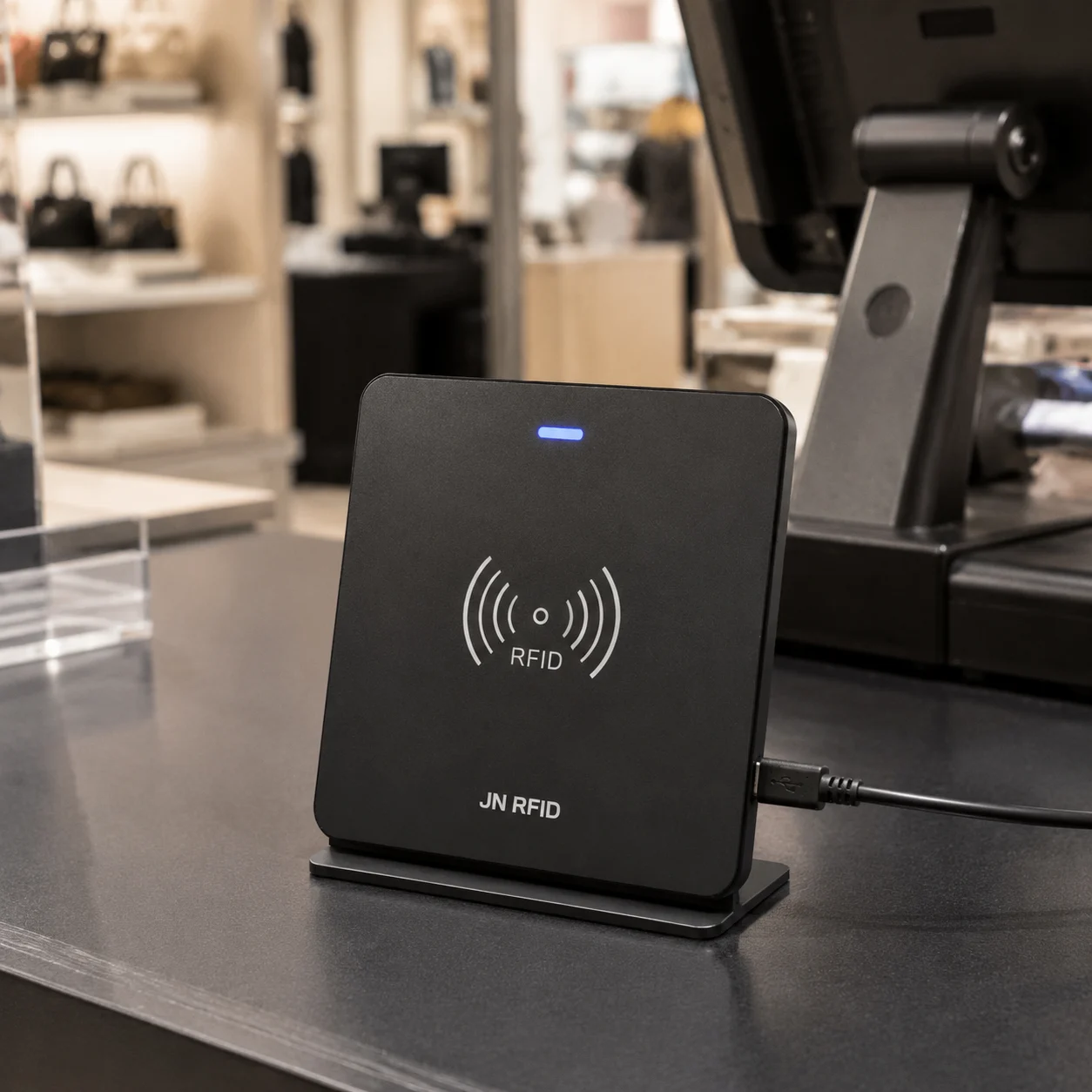
Desktop & Embedded Readers
Optimized for proximity read zones such as retail POS stations, front desk reception hubs, and smart library circulation desks.
Compact, low-profile footprints suitable for standalone desktop placement or seamless embedding into self-service kiosks and turnstiles.
Utilizes driverless USB or serial plug-and-play connectivity to accelerate local software terminal integration.
As a direct manufacturer, JN RFID provides comprehensive OEM/ODM customization services, including custom exterior casing design, logo silkscreen printing, and tailored firmware configurations to match your branding and system specifications.
Industry Applications: Engineered RFID Readers for Diverse Deployments
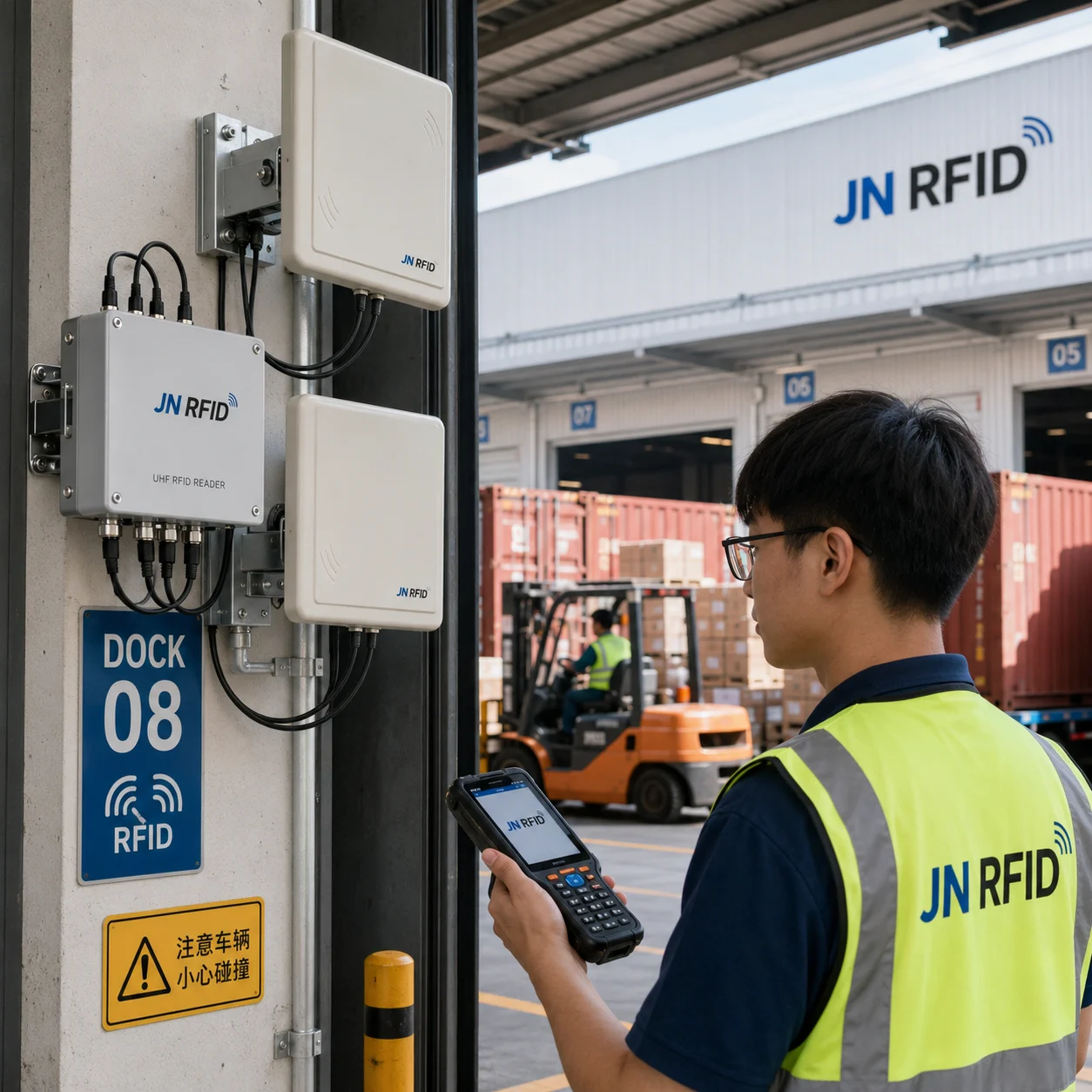
Warehouse & Logistics Management
- Deploy fixed UHF readers paired with high-gain patch antennas to establish automated choke points at high-traffic inbound and outbound dock doors.
- Utilize rugged handheld RFID scanners to enable rapid inventory verification, real-time cross-docking, and instantaneous data reconciliation with native WMS or ERP software pipelines.
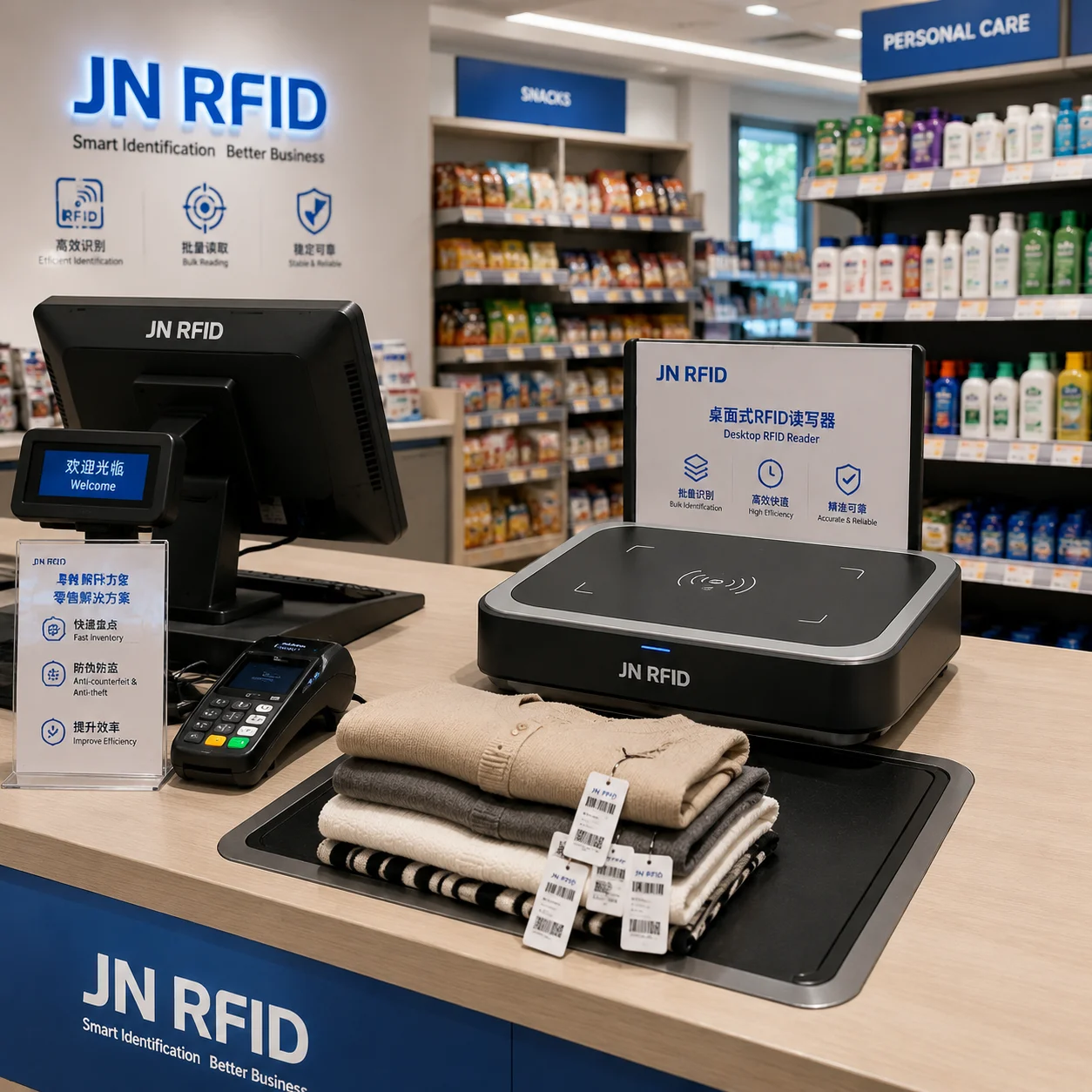
Retail Inventory & Smart Shelving
- Integrate compact desktop scanners at checkout counters for efficient multi-tag bulk identification to accelerate sales processing and reduce wait times.
- Install perimeter-mounted fixed scanners to build electronic article surveillance paths and capture continuous data for smart shelf replenishment.
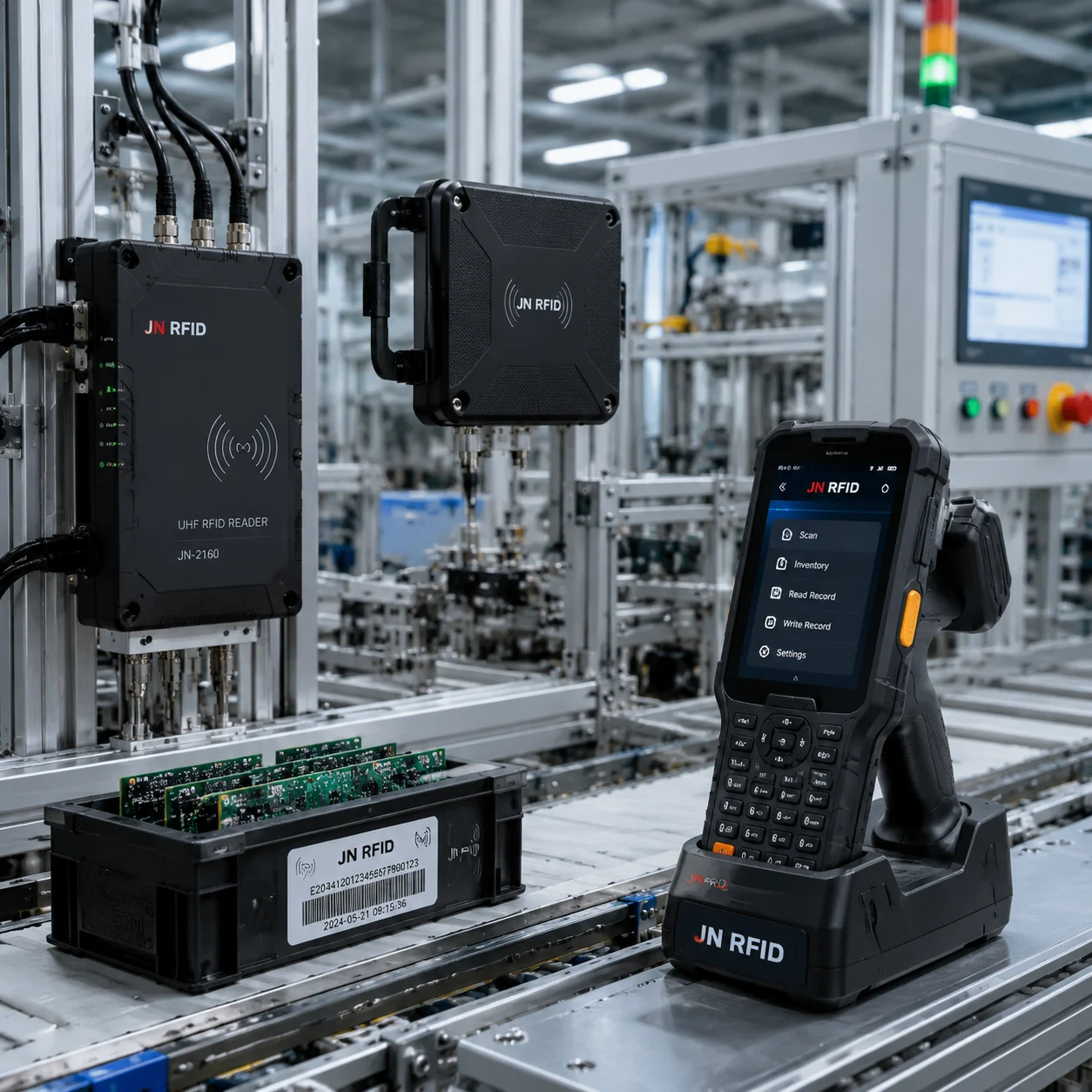
Access Control & Hospitality Management
- Embed secure HF reader modules to process encrypted MIFARE and NTAG credentials for precise access control and staff authentication using dedicated access control RFID cards.
- Integrate hardware seamlessly into turnstiles, smart door locks, and hotel property management systems to automate guest check-ins and facility routing with compatible hotel RFID key cards.

Industrial Automation & Manufacturing Tracking
- Position heavy-duty fixed RFID readers along assembly lines to track work-in-progress components under demanding thermal or electromagnetic conditions.
- Connect hardware directly to industrial PCs and PLCs via standard fieldbus interfaces to ensure uninterrupted uptime and high read-rate accuracy.
JN RFID provides proven hardware solutions engineered to meet the rigid demands of logistics, retail, hospitality, and heavy industry. Our comprehensive range of fixed, handheld, and desktop RFID readers ensures a highly compatible deployment for every environment. Backed by dedicated engineering support and robust software SDK integration, we empower system integrators and solution providers to accelerate deployment timelines, optimize read ranges, and maximize operational efficiency.
How to Choose RFID Readers: High-Level Parameters for System Architecture
Selecting the ideal hardware configuration is critical for achieving optimal read rates and smooth software deployment. This engineering guide simplifies the procurement process for system integrators and solution architects by mapping out key parameters across four essential deployment steps, and can be paired with the right RFID cards for your application.
Step 1: Determine Frequency Band & RFID Reader Protocol
Match your core operational environment to the appropriate operational frequency and global air interface compliance standards.
- HF (13.56 MHz): Best for localized, high-security proximity zones, secure corporate access control systems, cashless closed-loop payments, and micro-tracking supported by access control RFID cards.
- UHF (860–960 MHz): Engineered for high-speed, long-range data capture across bulk logistics networks, commercial fleet tracking, and wide-area inventory management.
- Protocol Alignment: Ensure compliance with ISO 14443 and ISO 15693 standards for high-frequency or EPC Global Gen 2 and ISO 18000-6C for ultra-high-frequency environments.
Step 2: Define RFID Reader Range & Environmental Stress
Evaluate physical installation constraints, target scan fields, and the ruggedness required to withstand physical deployments.
- Form Factor: Balance the space savings of a localized desktop footprint with the expandable, multi-port fixed reader modules built for multi-antenna array setups.
- Interference Mitigation: Account for nearby metallic reflections, high-density liquid storage, ambient humidity, outdoor exposure, and industrial IP ingress protection ratings.
Step 3: Map Required RFID Reader Interface & Power Delivery
Verify physical connectivity compatibility with your facility's legacy network topology and field controller layouts.
- Local Bus Connections: Utilize standard plug-and-play USB interfaces or industrial serial connections for dedicated hardware stations.
- Network Topology: Deploy RJ45 Ethernet, RS485 loops, or Wiegand signaling to interface seamlessly with centralized security architectures.
- Mobile Deployments: Specify handheld scanning terminals equipped with enterprise-grade Wi-Fi, 4G LTE, Bluetooth, and high-capacity battery cells.
- Power Distribution: Prioritize Power over Ethernet (PoE) configurations on fixed assembly lines to reduce industrial wiring expenses and hardware complexity.
Step 4: Audit Software Integration & Custom Development Resources
Assess the availability of low-level software assets to expedite backend system development and middleware configuration.
- Verify access to native software development kits (SDKs), well-documented APIs, and functional source code samples.
- Confirm developer ecosystem compatibility across common enterprise languages including C#, Java, C++, and Android environments.
- Leverage transparent registry commands, low-level protocol documentation, and active engineering support channels to minimize system debugging loops.
System engineering teams can eliminate integration friction and deployment risks during hardware specification by checking these parameters. The JN RFID technical division is prepared to assist with targeted system recommendations based on your unique combination of frequency requirements, range profiles, connection buses, and proprietary software layers.
RFID Reader SDK & Hardware System Integration
Enterprise deployment demands physical hardware backed by a robust software layer. JN RFID provides system integrators and software developers with comprehensive development tools, multi-platform drivers, and flexible APIs to bridge the gap between edge RFID tracking and core business intelligence. For access control, hospitality, and identification projects, our reader SDK pairs seamlessly with RFID cards so you can validate end-to-end system performance.
- Cross-Platform OS Support: Native drivers covering Windows, Linux, and Android architectures for versatile device deployment.
- Multi-Language Libraries: Ready-to-use sample code and compiled SDK packages in C#, C++, Java, and Python to accelerate engineering workflows.
- Flexible Transport Protocols: Seamless support for Serial port, TCP/IP, HTTP POST, and WebSocket streams ensuring reliable hardware-to-cloud data paths.
- Low-Level Configuration: Open documentation with full protocol references and command registries for custom firmware adjustments and remote device tracking.
Our architecture secures a structured data path from the ground up: Data originates at the hardware layer via fixed, handheld, and desktop RFID readers, moves through the middleware layer using native JN RFID drivers and core API endpoints, and pipes directly into the enterprise application layer to populate WMS, MES, ERP, hospitality PMS, or custom cloud analytical databases that rely on hotel RFID key cards and similar credential media.
Need developer resources? Request our RFID reader API documents and SDK tools today. JN RFID’s application engineers provide remote technical support and parameter tuning to optimize your system integration.
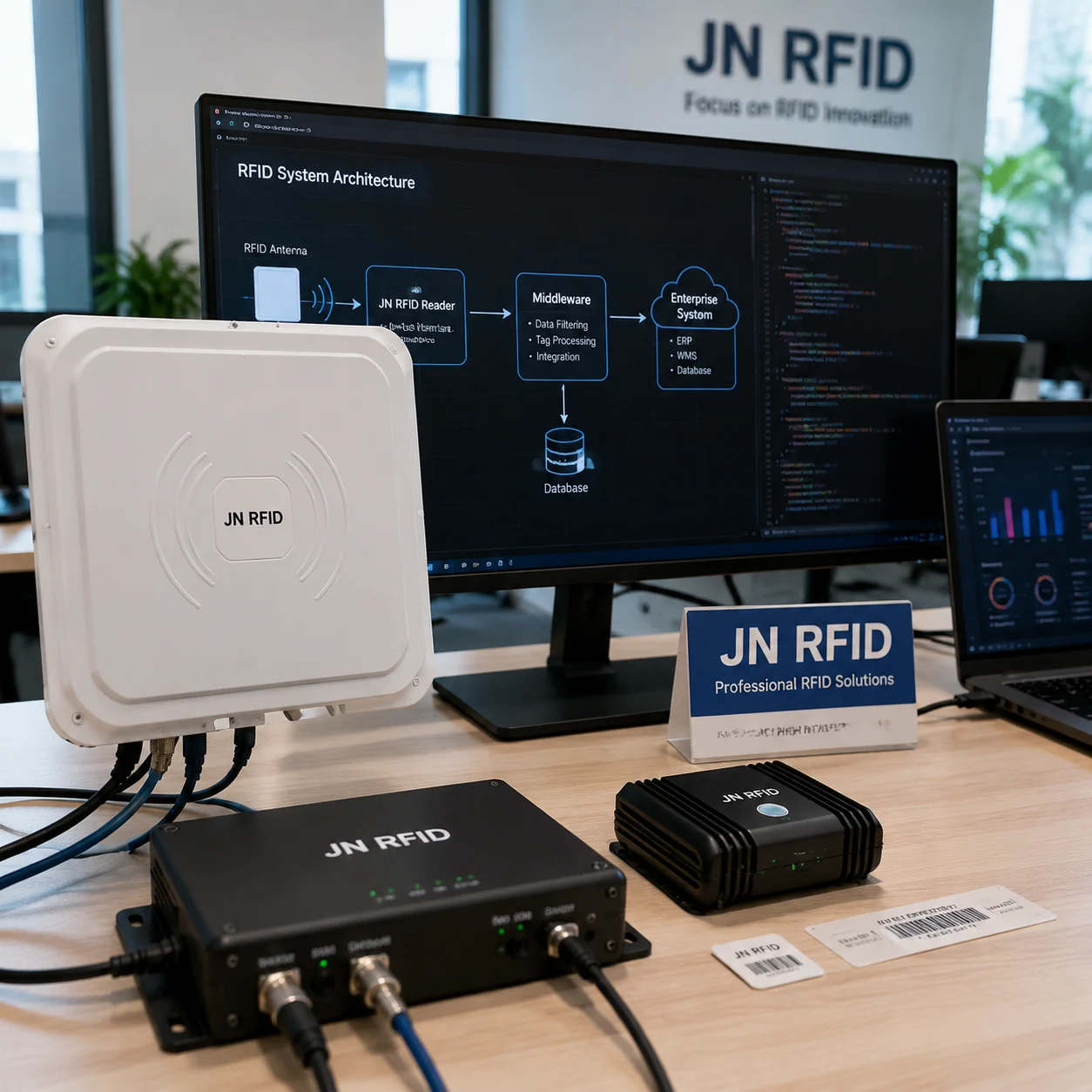
Get developer resources and SDK documentation to accelerate your RFID reader integration project.
RFID Hardware Manufacturing Capacity & Quality Control
As a dedicated RFID hardware supplier based in China, JN RFID combines enterprise-scale production with rigorous quality assurance protocols to deliver dependable, high-performance scanning equipment to system integrators worldwide. We also support custom card deployment through our custom printed RFID cards for branded and application-specific projects.
- 10+ Years of Expertise: Specialized experience in precision RFID smart card and hardware manufacturing, including blank printable RFID cards for flexible on-demand personalization.
- 100M+ Units Annually: Scalable annual manufacturing capacity spanning transponders, smart labels, and reader terminals.
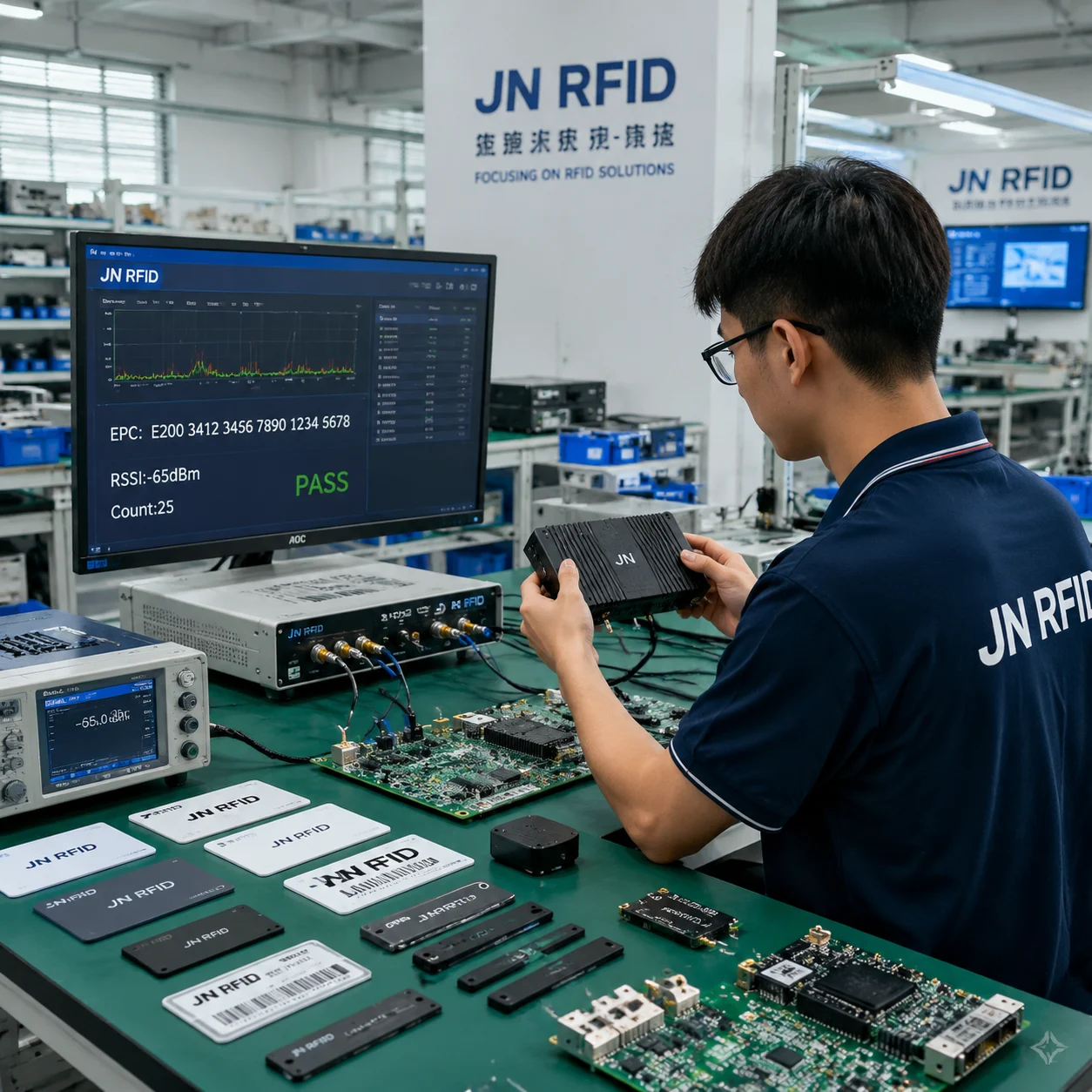
- 100% Bench Testing: Every terminal undergoes exhaustive validation of RF output power, protocol compliance, and communication port integrity prior to shipment.
- Global Certifications: Fully certified under the ISO 9001:2015 quality framework with hardware compliant with CE, FCC, and RoHS standards.
- Advanced OEM/ODM Production: High-speed automated SMT assembly, precision ultrasonic welding, and automated testing guarantee absolute RF consistency across large volume runs.

RFID Readers B2B Cooperation and Customization Capability
As a long-term B2B partner, JN RFID supports strict delivery schedule management and batch traceability. We provide flexible procurement channels and OEM manufacturing options, fully supporting everything from small batch trial production to cross-year large-scale rolling supply. Whether it is adjusting frequency bands, optimizing power, or customizing interface boards and specific housing geometry, we can efficiently meet your project requirements and match them with RFID cards and reader hardware combinations.
Cooperation Models and Supply Capabilities
- Support from small batch trial production to large-scale rolling supply, with flexible MOQ policies
- Deep customization of frequency band, power, industrial interfaces, and housing form factor based on project needs
- Provide bundled hardware solutions of tags, readers, and software interfaces, including custom printed RFID cards for branding and access control scenarios
- Standardized customized R&D process to ensure efficient implementation of large-scale infrastructure projects with access control RFID cards and industrial-grade readers
Start Project Cooperation in Three Simple Steps
- 01
Send Your Project Description
Submit your core application scenarios, estimated purchase quantities, and expected delivery schedule.
- 02
Engineer Recommendation and Quotation
JN RFID application engineers precisely match the hardware combination for you, including suitable RFID cards and readers, and provide transparent tiered quotations.
- 03
Prototype Verification and Mass Production
After prototype testing is passed, we initiate automated manufacturing processes and synchronized supply chain distribution to ensure on-time delivery.
Ready to start your RFID reader hardware project? Share your requirements and our engineering team will respond within 24 hours.
RFID Readers & Scanners: Frequently Asked Questions
Get answers to common technical considerations and purchasing guidelines from JN RFID to simplify your hardware selection, and explore how our RFID cards integrate with your readers and antennas.
Didn't find your specific question?
Request a Hardware Quote & Selection Consultation
Share your application environment, expected deployment scale, and project timeline. JN RFID’s engineering team will design a fully compatible hardware configuration and recommend the optimal reader, card, and tag combination for your system, including options like RFID cards and access control RFID cards.
Contact via WhatsApp: +86 13954091520
Your information is strictly used for technical and quotation purposes and will not be shared with third parties.