Overview
Active rfid tag uhf beacons use onboard batteries to broadcast radio waves for asset tracking, yard management, and vehicle windshield access at ranges passive labels cannot match. Each uhf active rfid tags program supports 433 MHz or 860–960 MHz frequency band options with battery life tuned via beacon interval.
| Parameter | Typical specification |
|---|---|
| Frequency | 433 MHz active RFID tag / 860–960 MHz UHF options |
| Read range | 30–100+ m (100–300+ ft) open space |
| Battery life | 3–5 years (beacon interval dependent) |
| Enclosure | IP67/IP68 rugged housings |
| MOQ | From 100 pcs (samples 3–5 days) |
Need reader-powered labels instead? Compare our passive UHF RFID tag line — this page covers factory-direct uhf rfid active tag and uhf rfid tag active OEM programs for long-range RTLS.
Active RFID Tag UHF: Long-Range Tracking Solutions
Factory-direct active UHF RFID tag hardware delivers continuous signal broadcast for yard, fleet, and industrial deployments where passive rfid labels lack range and penetration.
Key Product Highlights
Our battery-powered UHF RFID tag line is built for performance, durability, and seamless system integration.
- Extreme Read Range: Achieve reliable data transmission up to 100 meters (330 feet) depending on your environment.
- Long Battery Life: Advanced power management ensures continuous operation for 3 to 5 years before replacement.
- Ruggedized Form Factors: Built with IP67/IP68 rated housings to withstand extreme weather, heavy impacts, and chemical exposure.
- High Anti-Collision Rate: Track hundreds of items simultaneously as they move through your choke points.
Primary Applications at a Glance
| Industry Sector | Primary Use Case | Key Benefit |
|---|---|---|
| Logistics & Yard Management | Real-time container and trailer tracking | Eliminates manual inventory checks |
| Industrial Asset Tracking | Monitoring heavy machinery and raw materials | Prevents loss and optimizes utilization |
| Vehicle Identification | Automated tolling and car parking access control | Hands-free, high-speed vehicle clearance |
| Personnel Safety | Real-time location tracking in hazardous zones | Automates roll calls and mustering compliance |
Active RFID Tag UHF: Technology Overview
We design our active rfid tag uhf series to handle the toughest tracking challenges where standard passive tags fall short. By combining an internal power source with ultra-high frequency radio waves, these transponders deliver continuous, long-range data transmission without relying solely on reader energy.
What Is an Active UHF RFID Tag?
An active UHF RFID tag is a battery-powered UHF RFID tag that continuously broadcasts its own signal. Unlike passive tags that wait to be powered up by a reader, our active transponders actively push data out, ensuring reliable real-time tracking even in high-interference zones.
Frequency Band & Standards
Our hardware operates on optimized ultra-high frequency bands to ensure global compliance and seamless system integration.
| Parameter | Specification |
|---|---|
| Primary Frequency | 433 MHz active RFID tag band (Standard) / 860-960 MHz options |
| Protocol Standards | ISO/IEC 18000-7, Active EPC Gen2 RFID tag compatible frameworks |
| Regulatory Compliance | FCC Part 15 (US), CE (Europe) |
Signal, Read Range & Performance
Because these tags don't rely on backscatter reflection, the signal penetration is exceptionally strong.
- Long-Range Coverage: Achieve stable read ranges from 100 to over 300 feet (30 to 100+ meters).
- Signal Penetration: Easily transmits through liquids, wood, and dense construction materials.
- Anti-Collision: Built-in anti-collision algorithms allow readers to capture hundreds of UHF RFID beacons simultaneously.
Power Source & Battery Life
Every battery-powered UHF RFID tag we manufacture features specialized industrial-grade lithium batteries optimized for extreme temperature swings.
- Operational Lifespan: Typically 3 to 5 years, heavily dependent on the configured beacon interval (ping rate).
- Power Management: Configurable sleep modes keep energy consumption low when assets are stationary.
- Battery Monitoring: Low-battery alerts automatically transmit to your tracking software before shutdown occurs.
Memory & Data Management
Data security and storage flexibility are built right into the chip architecture.
- Writable Memory: Supports user memory banks for storing asset history, maintenance logs, or sensor data.
- Secure Encryption: Features proprietary encryption options to prevent unauthorized tag cloning or data skimming.
- Dynamic Data: Easily pairs with real-time location RFID tag (RTLS) software to update location coordinates instantly.
Active RFID Tag UHF: Variants & Form Factors
We design our active RFID tag UHF lineup to match the exact physical and environmental demands of your deployment. Every facility is different, which is why we offer multiple form factors tailored for specific operational challenges.
Standard Active UHF Tag Models
Our standard UHF active RFID tags feature a compact, low-profile housing ideal for everyday commercial use. These lightweight transponders easily attach to office equipment, IT assets, and retail infrastructure where space is tight but long-range tracking is essential.
Rugged & Specialty Form Factors
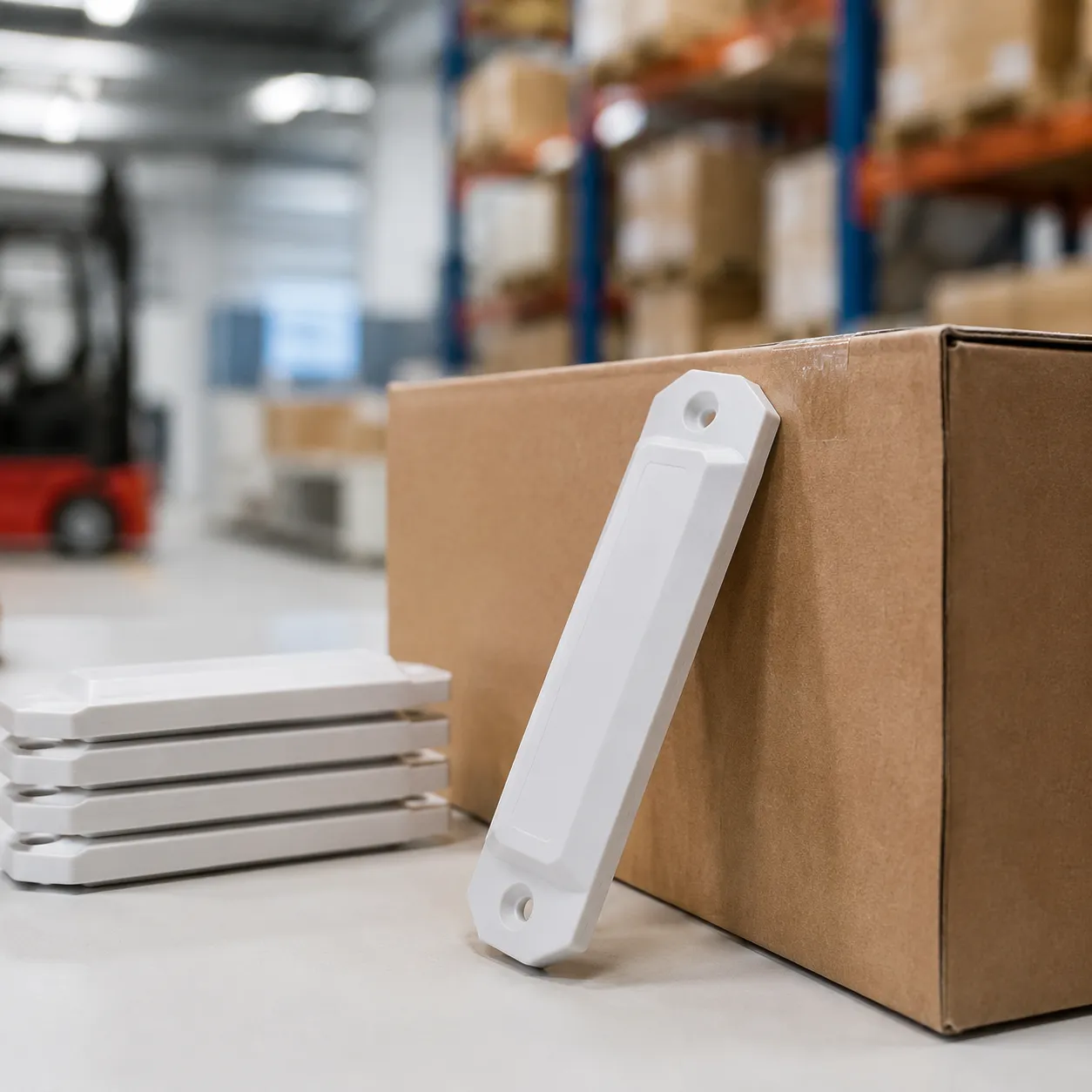
For heavy industrial use, we manufacture an active RFID metal-mount tag built to survive high impacts, extreme weather, and chemical exposure. These heavy-duty industrial active RFID tag options prevent detuning when attached directly to steel beams, shipping containers, or heavy machinery.
Wearable & Personnel Tags
Safety and security require specialized designs. Our wearable UHF RFID RTLS tag models come in convenient badge or wristband form factors, making it easy to track personnel locations, monitor restricted area access, or automate check-ins for staff safety.
Sensor-Integrated Variants
When simple identification isn't enough, our advanced battery-powered UHF RFID tag options include integrated sensors. These units track and transmit more than just location:
- Temperature Monitoring: Perfect for cold chain logistics and perishable goods.
- Motion & Ambient Light: Detects unauthorized movement or tampering in real time.
- Humidity & Moisture: Ideal for sensitive electronic devices and raw material storage.

Active RFID Tag UHF: Detailed Specifications
We engineer every active rfid tag uhf unit to deliver maximum reliability in demanding environments. Below are the precise technical details, electrical parameters, and mechanical limits that define our high-performance hardware.
Electrical Specifications
Our battery-powered UHF RFID tag models utilize optimized power management circuits to maximize operational life while maintaining strong signal broadcast intervals.
| Parameter | Specification |
|---|---|
| Battery Type | Industrial-grade Lithium CR2032 / CR2477 (Internal) |
| Operating Voltage | 3.0V DC |
| Quiescent Current | < 1.5 µA |
| Peak Emission Current | 12 mA to 15 mA |
| Expected Battery Life | 3 to 5 years (Depending on beacon interval) |
RF & Performance Specifications
Operating across major international frequencies, these UHF active RFID tags provide long-range data transmission with excellent anti-collision capabilities.
- Frequency Band: 433 MHz ISM band (Options for 860-960 MHz hybrid configurations)
- Modulation Mode: FSK / GFSK
- Signal Output Power: Up to +10 dBm (Programmable)
- Read Range: Up to 150 meters (492 feet) in open space
- Encoding Standards: Custom proprietary protocol / active EPC Gen2 RFID tag compatible layers
Mechanical & Environmental Specifications
Built as an industrial active RFID tag, the rugged housing withstands extreme temperatures, heavy impacts, and chemical exposure.
| Feature | Rated Specification |
|---|---|
| Housing Material | Heavy-duty ABS / Polycarbonate blend |
| IP Protection Rating | IP67 / IP68 (Waterproof and dustproof) |
| Operating Temperature | -40°C to +85°C (-40°F to +185°F) |
| Shock / Vibration | MIL-STD-810G Compliant |
| Dimensions | 86mm x 54mm x 10mm (Standard variant) |
Mounting & Installation
Every deployment scenario requires a reliable physical connection. We design our housings to accommodate diverse industrial mounting methods.
- Active RFID metal mount tag integration: Includes a built-in RF isolation shield for direct attachment to steel beams, containers, and machinery.
- Mechanical Fastening: Dual screw holes for heavy-duty rivets or M4 screws.
- Adhesive Backing: High-tack 3M VHB industrial tape for clean, drill-free placement.
- Vehicle Windshield Placement: Specialized suction or slot-mount brackets designed for reliable car parking and fleet access control.
System Integration for Active RFID Tag UHF
Reader & Infrastructure Compatibility
We build our active UHF RFID tags to integrate smoothly with your existing setups. Whether you deploy standard fixed readers, mobile handhelds, or gateway portals, our active RFID transponder UHF line communicates reliably across mainstream infrastructure. You won't need to rip and replace your current hardware assets to achieve dependable, long-range tracking.
Software & Tracking Platforms
Connecting hardware to your software shouldn't be a headache. Our battery-powered UHF RFID tags transmit clean, structured data payloads that pair perfectly with enterprise tracking platforms.
- Easy API Integration: Fast setup with standard warehouse management systems (WMS) and ERPs.
- RTLS Compatibility: Plugs directly into real-time location RFID tag software for instant tracking.
- Cloud-Ready Data: Sends tag data straight to cloud networks via standard IoT gateways.
Interference & RF Environment Considerations
Industrial environments are packed with metal, concrete, and competing wireless signals. We engineer our UHF active RFID tags with advanced filtering and anti-collision technology to cut through the noise.
| RF Challenge | Our Engineering Solution | Operational Benefit |
|---|---|---|
| Heavy Metal Surfaces | Specialized active RFID metal-mount tag tuning | Prevents signal detuning and blind spots |
| Signal Overlap | Smart beacon intervals and multi-channel hopping | Zero missed reads in high-density tag zones |
| Physical Obstacles | High-penetration 433 MHz active RFID tag options | Reliable signal propagation through dense inventory |

We tune every active rfid tag uhf to maintain strong, stable signal communication in crowded RF environments, ensuring your automated data collection never drops a beat.
Use Cases & Industry Applications
We design our active rfid tag uhf solutions to handle the toughest tracking challenges across US industries. When passive tags fall short on range or reliability, our battery-powered hardware steps in to deliver real-time data.
Industrial Asset Tracking
High-value machinery, manufacturing tools, and heavy equipment don't stay in one place. Using an active RFID tag for asset tracking ensures you know exactly where your critical physical assets are located across large facilities, preventing expensive downtime and replacement costs.
Warehouse, Logistics & Yard Management
- Real-Time Logistics: Track shipping containers and trailers instantly as they enter the yard.
- Staging Automation: Speed up cross-docking operations with automated arrival alerts.
- Inventory Accuracy: Eliminate manual scanning for bulk goods and oversized freight.
Vehicle Identification & Parking Control
Managing fleet access requires speed and precision. Our UHF RFID vehicle tag options double as an efficient active RFID parking tag, allowing gated communities, corporate lots, and logistics hubs to automate hands-free vehicle access control from long distances without requiring drivers to roll down their windows.
Personnel Safety & Compliance
Protecting your crew is a top priority. By deploying a UHF RFID RTLS tag system, safety managers can monitor restricted zones, automate muster station check-ins during emergencies, and ensure OSHA compliance on complex jobsites without invading worker privacy.
Harsh & Specialized Environments
Standard labels fail in extreme conditions. We build our active RFID metal-mount tag hardware with ruggedized enclosures to withstand the brutal realities of outdoor storage, chemical exposure, heavy impacts, and extreme temperatures.
| Industry | Common Application | Primary Benefit |
|---|---|---|
| Manufacturing | Heavy Machinery Tracking | Prevents tool hoarding and loss |
| Logistics | Yard Management | Speeds up trailer turnaround times |
| Transportation | Fleet Access Control | Hands-free gate triggering |
| Construction | Crew Safety Monitoring | Instant emergency roll calls |

Active vs. Passive UHF RFID Comparison
Choosing the right technology for your tracking system comes down to understanding how active and passive systems stack up. Our active UHF RFID tag line solves specific challenges that passive labels cannot handle in open yards and RTLS zones.
Performance Comparison
The main difference lies in the power source and read capabilities. A battery-powered UHF RFID tag continuously broadcasts its own signal, while a passive rfid tag relies entirely on the energy transmitted from the reader antenna to wake up and reflect a signal back.
| Feature | Active UHF RFID Tag | Passive UHF RFID Labels |
|---|---|---|
| Power Source | Internal battery (Built-in) | External (Powered by the reader) |
| Read Range | Long-range up to 300+ feet (100+ meters) | Short-range up to 30 feet (10 meters) |
| Signal Strength | Strong, continuous, and highly penetrating | Weak, easily blocked by liquids and metals |
| Data Storage | High capacity, supports sensor logging | Limited to basic identification numbers |
Cost & ROI
While a long-range RFID asset tag carries a higher initial hardware cost than a standard passive label, the return on investment (ROI) is realized through infrastructure savings and automation.
- Infrastructure Savings: Because active tags broadcast across massive distances, you need far fewer readers to cover a warehouse yard or facility.
- Labor Reduction: There is no need for employees to walk around scanning individual items. Scanning is completely automated and happens in real time.
- Asset Protection: For high-value machinery, vehicles, or critical tools, preventing a single lost asset covers the cost of an active tracking deployment.
Deployment Scenarios
We recommend looking at your physical environment and asset value to determine the best fit for your logistics platform.
- When to choose an active UHF RFID tag: Best for open-air yards, vehicle tracking, personnel safety zones, and real-time location tracking of high-value industrial equipment where long distances are a factor.
- When to choose passive RFID: Best for item-level retail, box-level inventory tracking, short-range checkpoints, and high-volume, low-cost disposable packaging.
Customization & OEM/ODM Services by JN RFID
No two tracking projects are exactly alike. OEM/ODM programs build the exact active rfid tag uhf solution your enterprise needs to succeed.
Custom Hardware Design
When standard enclosures don't fit your environment, we engineer custom shapes, sizes, and mounting setups. Whether you need an industrial active RFID tag that survives heavy machinery vibration or a slim UHF RFID vehicle tag for windshields, we handle the layout, prototyping, and housing design from scratch.
Chip, Memory & Encoding Customization
Data requirements change depending on your system architecture. We configure your active RFID transponder UHF devices with specific memory allocations for specialized data logging.
- Custom data encoding: Pre-programmed security keys and custom ID structures.
- Adjustable beacon intervals: Programmed at the factory to balance real-time tracking accuracy with long-term battery performance.
- Sensor integration: Custom firmware setups for temperature, humidity, or motion alerts on electronic devices and cold-chain assets.
Branding & Visual Customization
Keep your corporate identity consistent across all physical assets. We provide full visual tailoring for your battery-powered UHF RFID tag deployments:
- Laser-engraved or high-contrast printed barcodes and QR codes.
- Permanent, human-readable serial numbers.
- Custom asset matching colors and prominent company logo placement.
Regulatory & Regional Configuration
We ensure your tracking network remains fully compliant with local laws. We tune and certify every long-range RFID asset tag to meet specific regional wireless rules, including strict FCC compliance for the US market and standard 433 MHz active RFID tag frequencies. This guarantees zero interference and smooth integration with your existing network infrastructure right out of the box.
Active RFID Tag UHF: Factory & QA Advantages
US industrial and logistics operations demand absolute reliability from every active rfid tag uhf batch before yard or fleet rollout.
Factory-Direct Production
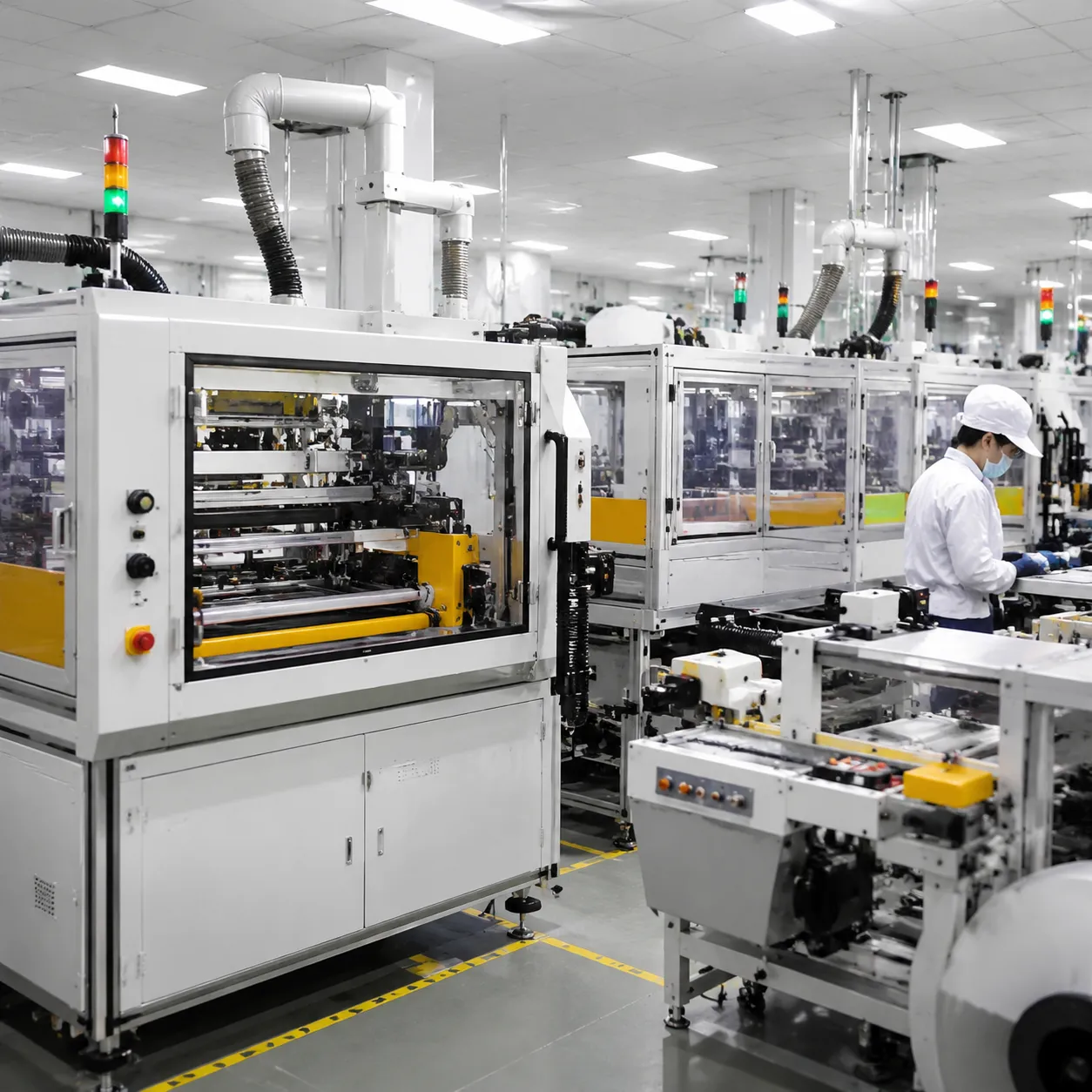
By controlling the entire manufacturing process, we offer significant cost savings, faster lead times, and flexible customization for every active rfid tag uhf order. We scale production seamlessly from initial pilot batches to large-scale enterprise rollouts.
High-Quality Components
We build our uhf active rfid tags using only premium, industrial-grade silicon, high-efficiency antennas, and long-lasting military-grade batteries. This ensures our battery-powered UHF RFID tag options perform consistently in the toughest environments.
Quality Control & Reliability
Every single active UHF RFID tag undergoes rigorous multi-stage testing before leaving our facility.
- RF Performance Tuning: Guaranteed consistent read ranges.
- Environmental Stress Testing: Verified impact, vibration, and thermal resistance.
- Battery Diagnostics: Ensured optimal power draw for maximum operational lifespan.
Global Compliance & Export Capability
Our products meet all FCC, CE, and RoHS standards, ensuring seamless deployment across North America and international sites. We handle all export documentation for hassle-free shipping and fast customs clearance directly to your facility.
Procurement, Ordering & Project Workflow
We stream-line your deployment process from initial concept to final roll-out. Our structured workflow ensures you get the exact active rfid tag uhf solution tailored to your operational environment with zero guesswork.
Step-by-Step Project Pipeline
Our team partners with you through five distinct phases to guarantee system compatibility and maximum ROI.
- Requirement Collection: We map out your tracking environment, read range needs, and mounting surfaces (such as metal or windshields).
- Technical Consultation: Our engineers select the ideal battery-powered UHF RFID tag frequency (e.g., 433 MHz) and firmware configuration for your software.
- Sampling & Pilot: We provide sample UHF active RFID tags for real-world field testing before you commit to a full deployment.
- Mass Production & Delivery: Factory-direct manufacturing with strict quality control ensures rapid turnaround and global compliance.
- After-Sales Support: Continuous technical backup, firmware updates, and battery lifecycle management support.
Project Execution Timeline
| Workflow Phase | Typical Duration | Key Deliverable |
|---|---|---|
| 1. Requirements & Consultation | 1–3 Days | Technical Solution Proposal & Link Budget |
| 2. Sampling & Field Pilot | 5–7 Days | Test-Ready Industrial Active RFID Tag Samples |
| 3. Mass Production | 2–3 Weeks | Quality-Assured Active RFID Transponder UHF Batch |
| 4. Delivery & Integration | Logistic Dependent | Certified Hardware & Tracking Software Integration |
Request a Quote
Send target read range, mounting surface (including metal mount or
vehicle windshield / car parking gate layouts), beacon interval,
and integration needs for a configured active rfid tag uhf proposal.
Contact JN RFID with quantity, firmware, and
tracking software API requirements.
FAQs – Active UHF RFID Tags
How far can JN RFID active UHF RFID tags be read?
Our active UHF RFID tag models typically achieve a stable read range of 20 or 30 to over 100 meters (100 to 300+ feet). The exact distance depends on the environment, reader antenna power, and line of sight.
What is the typical battery life and how is it affected by beacon interval?
The typical lifespan of a battery-powered UHF RFID tag ranges from 3 to 5 years. Sending signals less often (a longer beacon interval) saves power and extends the battery life significantly.
| Beacon Interval | Battery Lifespan Estimate | Ideal Use Case |
|---|---|---|
| 0.5 Seconds | 1.5 – 2 Years | Fast-moving vehicle tracking |
| 2.0 Seconds | 3 – 4 Years | Standard warehouse asset tracking |
| 5.0+ Seconds | 5+ Years | Static inventory or long-term storage |
Can active UHF tags be used together with passive UHF labels in one system?
Yes. Many hybrid setups use a long-range RFID asset tag for high-value equipment tracking alongside low-cost passive rfid labels for smaller inventory, managing both through a unified tracking software platform.
Are these tags suitable for mounting on metal or inside vehicles?
Absolutely. We design specific active RFID metal-mount tag variants with specialized housings that prevent signal loss on metal surfaces. For cars and trucks, our UHF RFID vehicle tag mounts perfectly onto a vehicle windshield without losing signal strength.
Which industries most commonly deploy active UHF RFID tags?
- Logistics & Yard Management: Tracking trailers and cargo containers.
- Construction & Mining: Monitoring heavy machinery and high-value tools.
- Personnel Safety: Managing real-time location RFID tag credentials for site compliance.
- Automotive: Automating access control using an active RFID parking tag.
What information can be stored on the tag, and how secure is it?
Each active RFID transponder UHF carries a unique ID (such as an active EPC Gen2 RFID tag identifier) and user memory for status data. We secure transmission with rolling codes or custom encryption to block unauthorized cloning and hacking.
How do I choose between 433 MHz and other UHF bands for my project?
Choose a 433 MHz active RFID tag if your project requires signals to pass through dense materials, liquid, or heavy metal clutter. For standard open spaces or global supply chain compliance, standard 860-960 MHz UHF RFID beacons work best.
What is the minimum order quantity and lead time?
Standard Minimum Order Quantity (MOQ) for an industrial active RFID tag batch is usually 100 pieces. Samples ship out within 3 to 5 working days, while bulk production takes about 2 to 3 weeks.
Do you provide reader hardware and antennas, or only tags?
We supply the complete ecosystem. Along with manufacturing uhf active rfid tags, we provide the matching reader hardware, directional antennas, and setup API tools to ensure a smooth system installation.
Can JN RFID customize tags for my proprietary tracking software?
Yes. We specialize in custom firmware tuning, custom data formatting, and specialized beacon configurations to make sure our UHF RFID RTLS tag units integrate smoothly with your existing tracking platform.