Overview
RFID Blocking Wallet Insert: Seamless Identity Protection
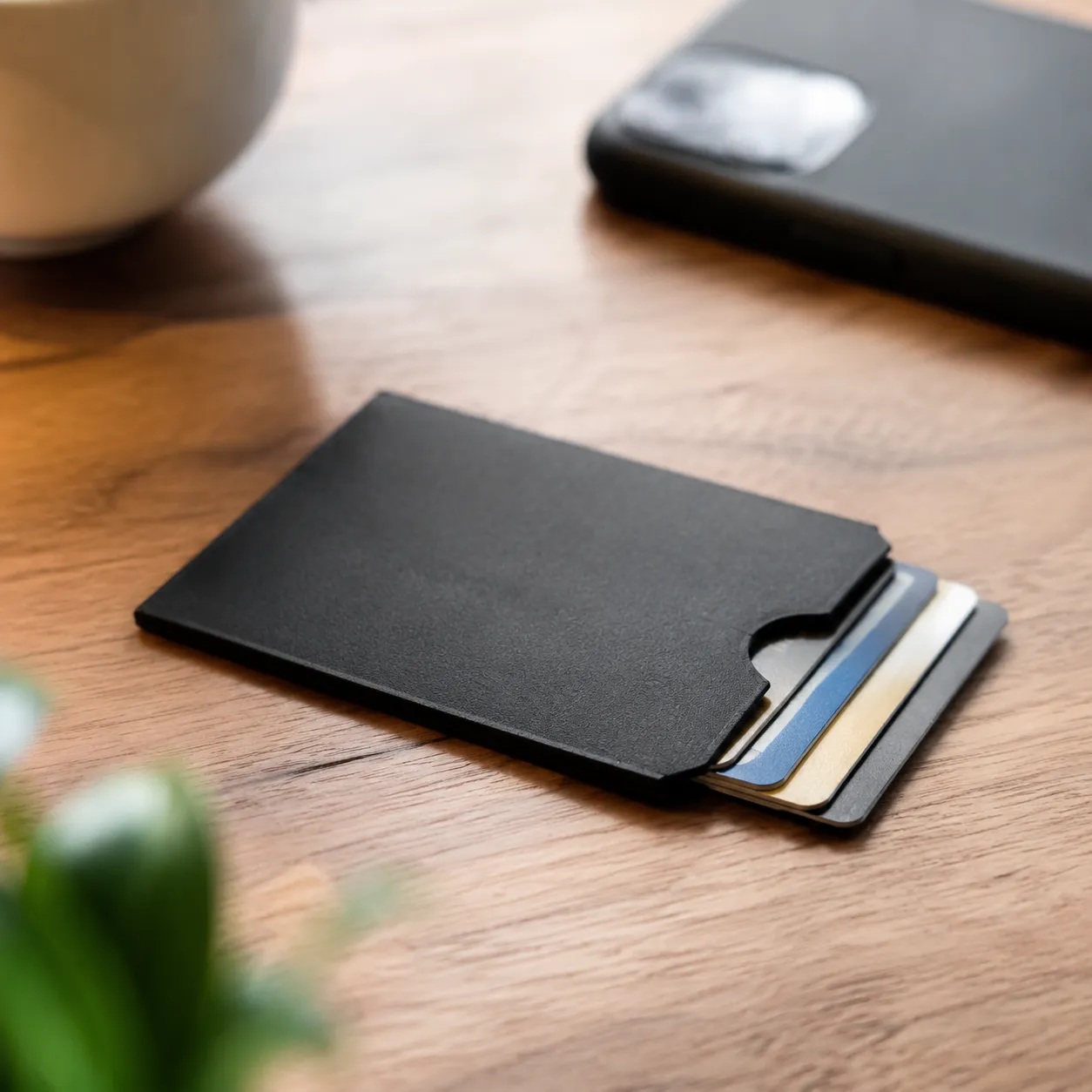
Modern contactless chipped cards broadcast payment and ID data that thieves can harvest with handheld rfid scanners in crowded transit hubs, airports, and festivals. To add identity protection without replacing a favorite billfold, we manufacture an ultra-thin rfid blocking wallet insert engineered for seamless integration. This low-profile liner or die-cut sheet fits standard bifold, trifold, and slim wallet card slots—an immediate electronic theft protection upgrade for end users and a value-add layer for wallet brands.
Product line note: This page covers OEM wallet inserts, liners, and armor plates (passive Faraday materials). For a finished RFID blocking card SKU with active shielding, see our RFID blocking card for wallet. For complete leather inserts and cardholders, see slim secure RFID blocking wallets.
Ideal Deployment Scenarios & Target Industries
These rfid inserts for wallets ship to B2B programs across:
- Leathercraft & Wallet Manufacturers: Laminate shielding into carbon fiber bifold or leather lines as a commercial-grade radio frequency identification blocker.
- Corporate & Promotional Gifts: Branded travel accessories and onboarding kits with data theft defense built in.
- Cyber Security & Banking Kits: Packaged with new contactless cards or access badges for unauthorized scanning defense.
How Wallet Inserts Block Contactless Skimming (13.56 MHz)

Unlike active jamming cards, a passive rfid blocking wallet insert works as a Faraday barrier: conductive layers absorb or reflect the reader field so 13.56 MHz tags cannot power up. No battery, no charging—shielding is physical. For passive vs active theory and threat types, see how RFID blocking works.
Placement in a Standard Billfold
End users and OEM testers get the best data theft coverage by centering the insert in the card stack. Sandwich payment cards within one card thickness on each side of the liner; a single insert can shield multiple cards in that zone without wrapping every plastic individually.
| Placement | Coverage |
|---|---|
| Center slot | Maximum—cards directly in front and behind the insert |
| Front / back slot | High—shields cards on the protected side of the insert |
Technical Specification Matrix
Core benchmarks for OEM qualification. Custom tuning available on request.
| Parameter | Specification Details |
|---|---|
| Primary frequency | 13.56 MHz — contactless credit/debit cards, e-passports, chipped IDs |
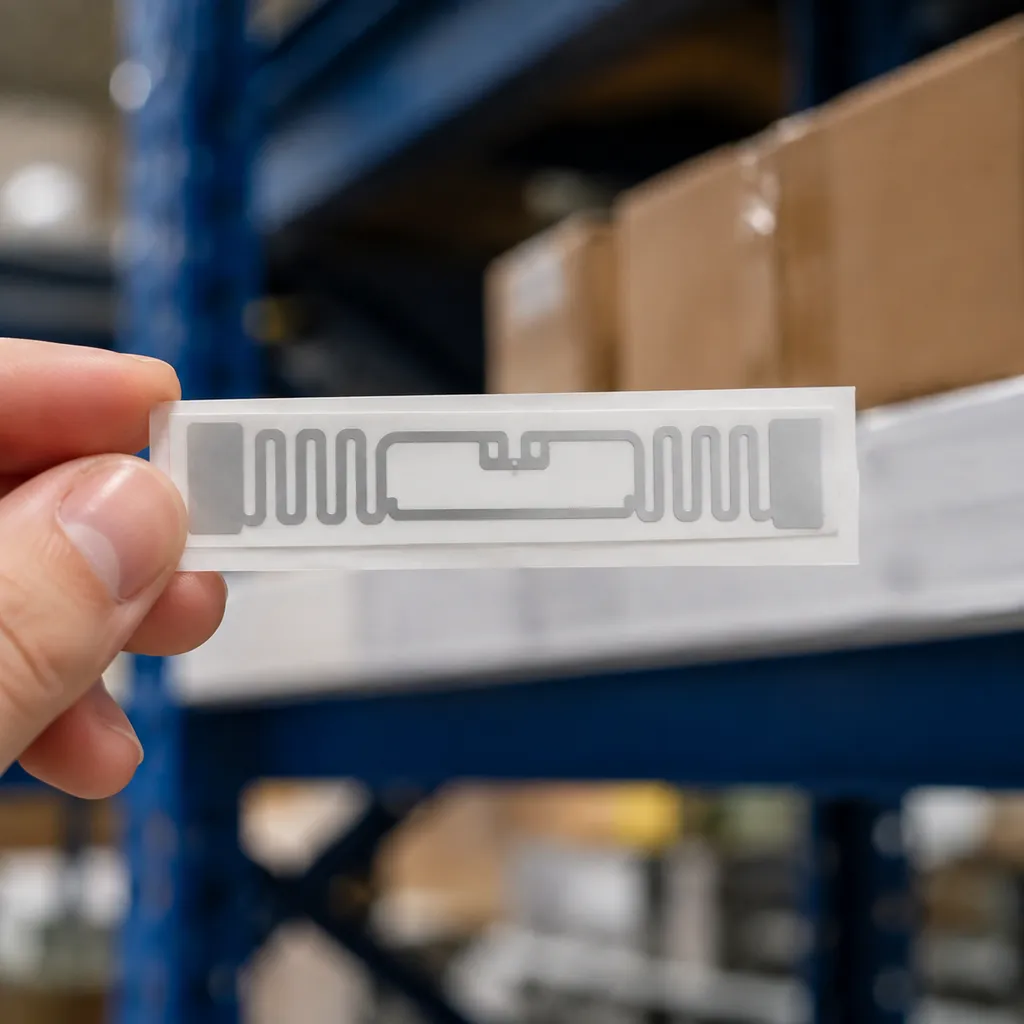
| Optional tuning | 125 kHz proximity or 860–960 MHz UHF — engineered per access-control or asset-tracking program (confirm with sales) |
| ID-1 card footprint | 85.60 × 53.98 mm (3.370 × 2.125 in) standard die-cut; custom shapes available |
| Materials | Metalized shielding fabric (Ni/Cu polyester) · rigid aluminum foil composites · flexible permeability alloys |
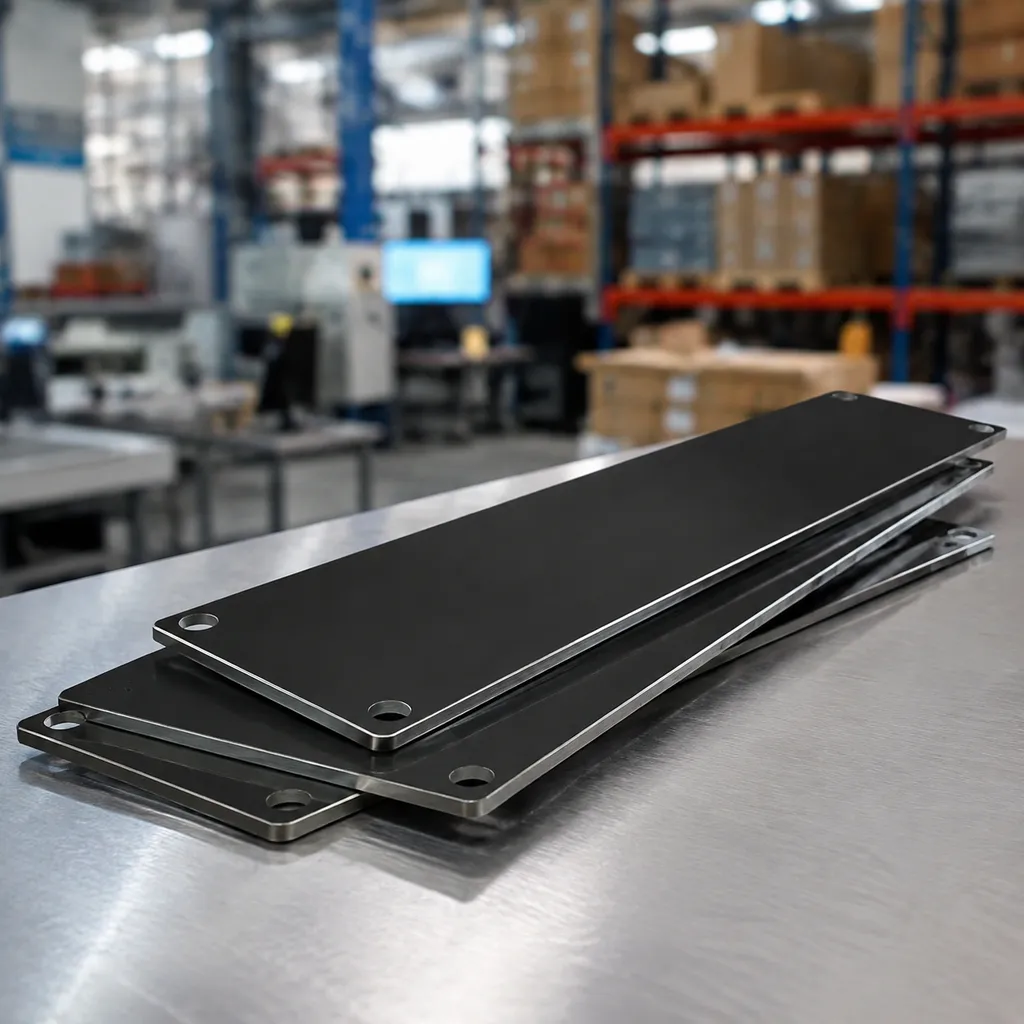
| Thickness matrix | Ultra-thin 0.10 mm (slim card blockers) · standard 0.25 mm (leather inserts) · rigid armor 0.50 mm+ (structural rfid armor plate) |
| Silicone compatibility | Bonds to silicone, PU, PVC, and TPU lamination without delamination |
| Compliance | RoHS and REACH; attenuation verified per batch (third-party lab reports available for OEM orders) |
Material Integration and Performance
Cross-hatched conductive grids absorb fields from rfid scanners and dissipate energy before tags respond. Industrial composites maintain shielding after repeated flex—suited to daily pocket bend in leather inserts or carbon fiber bifold production.
Insert vs Sleeve vs Blocking Card vs New RFID Wallet
Buyers search rfid inserts for wallets when they want shielding without a full wallet swap. Use this matrix to match SKU type to program goals.
| Option | Best for | Typical form | JN RFID path |
|---|---|---|---|
| Wallet insert / liner | OEM lamination, armor plate, factory-installed shielding | Sheet, die-cut liner, 0.10–0.50 mm | This page — OEM insert programs |
| Credit card sleeve protectors | Single-card retail packs, event giveaways | Open-top or envelope sleeve | Custom sleeve materials — quote on request |
| Blocking card (finished SKU) | Drop-in card for existing wallets; retail/OEM card SKU | ISO card ~0.76 mm; active or passive | RFID blocking card for wallet |
| New RFID wallet | Full product refresh, branded carry line | Leather/metal cardholder with built-in liner | Slim RFID blocking wallets |
Retail shoppers often compare DIY aluminum foil pouch hacks to engineered liners—production inserts deliver repeatable attenuation and clean lamination. To verify shielding in the field, see RFID blocking card tests, threats, and value (NFC checkout check applies to inserts as well).
Tailored Engineering: Custom Dimensions & Materials

Programs rarely share one thickness or outline. Engineering teams tailor each rfid blocking wallet insert to dimensional, aesthetic, and structural targets—ultra-slim cardholders through traditional bifolds—without adding unwanted bulk.
Customization Options
| Category | Options |
|---|---|
| Visual finishes | Matte, gloss, textured polymer, industrial weave, color matching |
| Security marking | Laser engraving, UV print, serialized QR, variable data |
| Structural engineering | Custom die-cut shapes, 0.2–0.8 mm sheets, adhesive backings, rigid rfid armor plate or flexible signal shielding materials |
Why Enterprise Buyers Partner with JN RFID
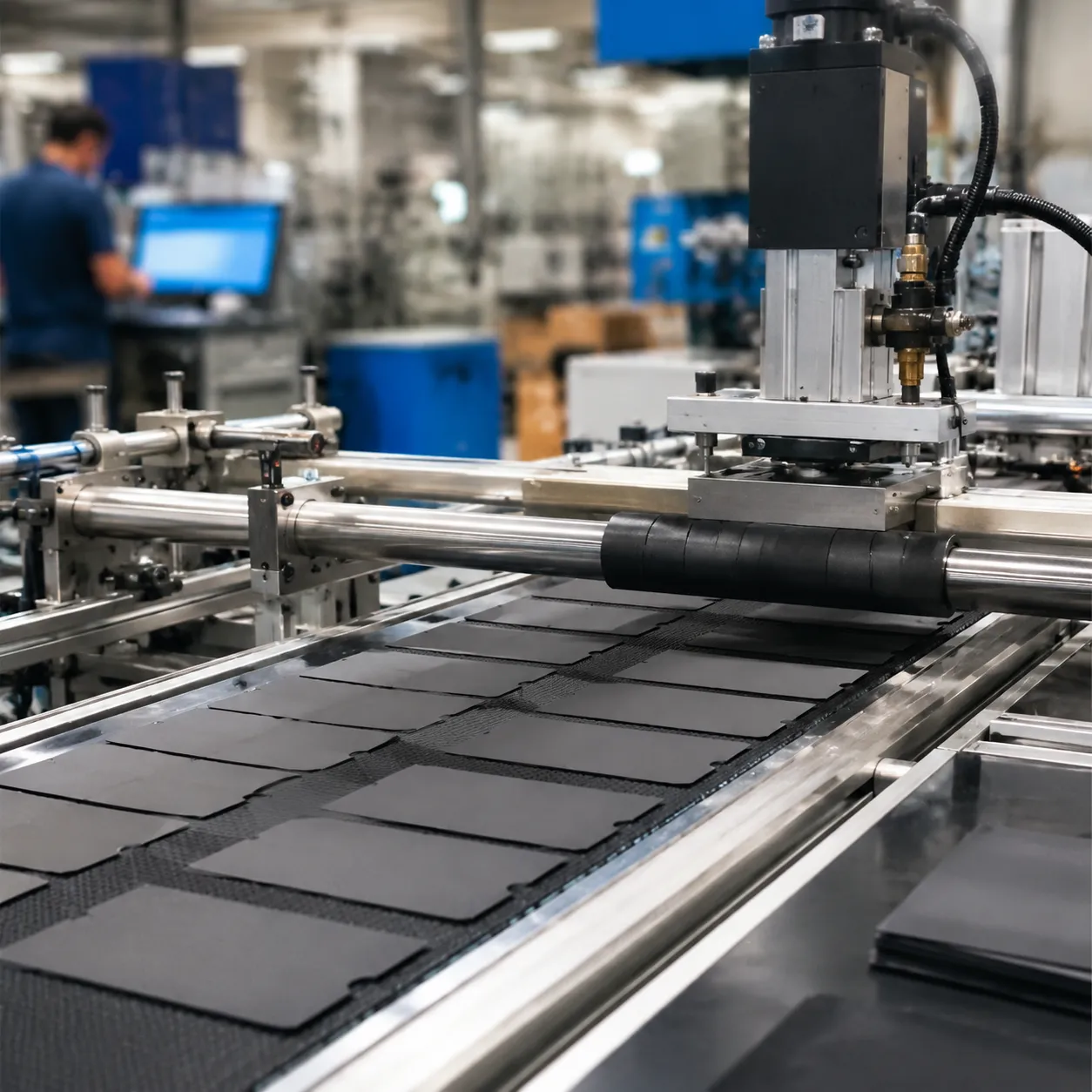
High-volume rfid blocking wallet insert programs integrate into tier-one wallet brands and enterprise security kits. In-house lamination and die-cutting control shielding consistency and lead times across the supply chain.
Automated High-Speed Production Lines
- Scalability: Prototype runs through high-volume contract manufacturing.
- Precision die-cutting: Tolerances within ±0.1 mm for slim wallet card and bifold slots.
- Consistent shielding: Roll-to-roll bonding maintains uniform signal shielding materials density.
Zero-Defect QA Protocol
Every batch of rfid inserts for wallets is tested before export.
| Phase | Method | Target |
|---|---|---|
| Attenuation | Network analyzer sweep at 13.56 MHz | Customer-defined acceptance (typical OEM target ≥45 dB in bench setup) |
| Durability | Flex and torsion fatigue | No delamination under repeated bending |
| Thickness | Laser micrometer | Matches approved thickness matrix |
Global Export Logistics
- Customs documentation: HS codes, FCC data, country-of-origin paperwork.
- Industrial packaging: Anti-static, moisture-resistant bulk cartons.
- Terms: FOB, CIF, and DDP aligned with corporate freight policies.
From Concept to Secure Global Delivery

Structured workflows move each rfid blocking wallet insert from blueprint to export with documented attenuation checks.
4-Step Production Pipeline
- 1. Technical evaluation — Thickness, material, and slot dimensions for your wallet line.
- 2. Prototyping & verification — Samples tested at 13.56 MHz before mass tooling.
- 3. Mass production — Automated lamination and die-cutting at scale.
- 4. Inspection & export — QC shielding tests and moisture-proof packing.
Delivery Milestones & Timeline
| Phase | Objective | Lead time |
|---|---|---|
| Technical evaluation | Blueprint and material sign-off | 1–2 days |
| Prototyping | Sample build and RF lab test | 3–5 days |
| Mass production | Line run and in-process inspection | 10–14 days |
| Export | QA, customs, air freight | 5–7 days (air) |
Ready to spec a liner for your next wallet run? Contact us for an OEM quote.
B2B Procurement & Technical Insights
Q: What is the MOQ for a custom rfid blocking wallet insert?
Standard MOQ for custom-branded rfid inserts for wallets is 1,000 units, optimized for automated production. Volume tiers apply for annual OEM/ODM contracts.
Q: How do engineered inserts compare to an aluminum foil pouch?
Foil pouches attenuate inconsistently, tear quickly, and crinkle in pockets. Production inserts use controlled signal shielding materials for repeatable 13.56 MHz frequency defense and clean factory integration.
| Feature | JN RFID insert | Aluminum foil pouch |
|---|---|---|
| Durability | Industrial polymer / composite | Tears easily |
| Shielding | Controlled 13.56 MHz attenuation | Inconsistent |
| Form factor | Slim wallet card blocker (<0.5 mm liners) | Bulky, crinkled |
| Use case | Credit card sleeve protectors and OEM lamination | Temporary DIY |
Q: Can we request custom frequency tuning for corporate badges?
Yes. Standard programs target payment and ID at 13.56 MHz; engineering can tune radio frequency identification blocker layers for proprietary badge frequencies on approved programs.
Q: How fast can we receive technical pricing?
Formal quotes are issued within 24 hours after dimensions, materials, and volume targets are confirmed.