Overview
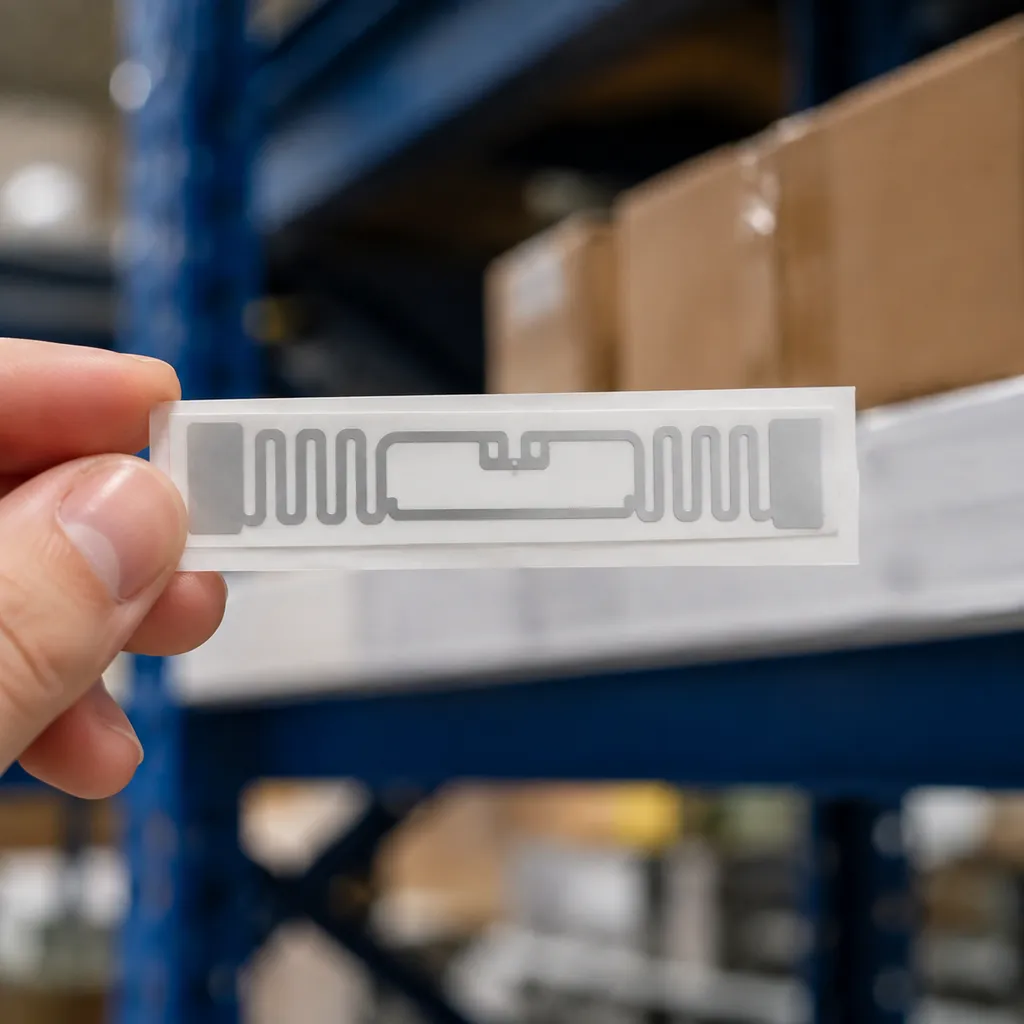
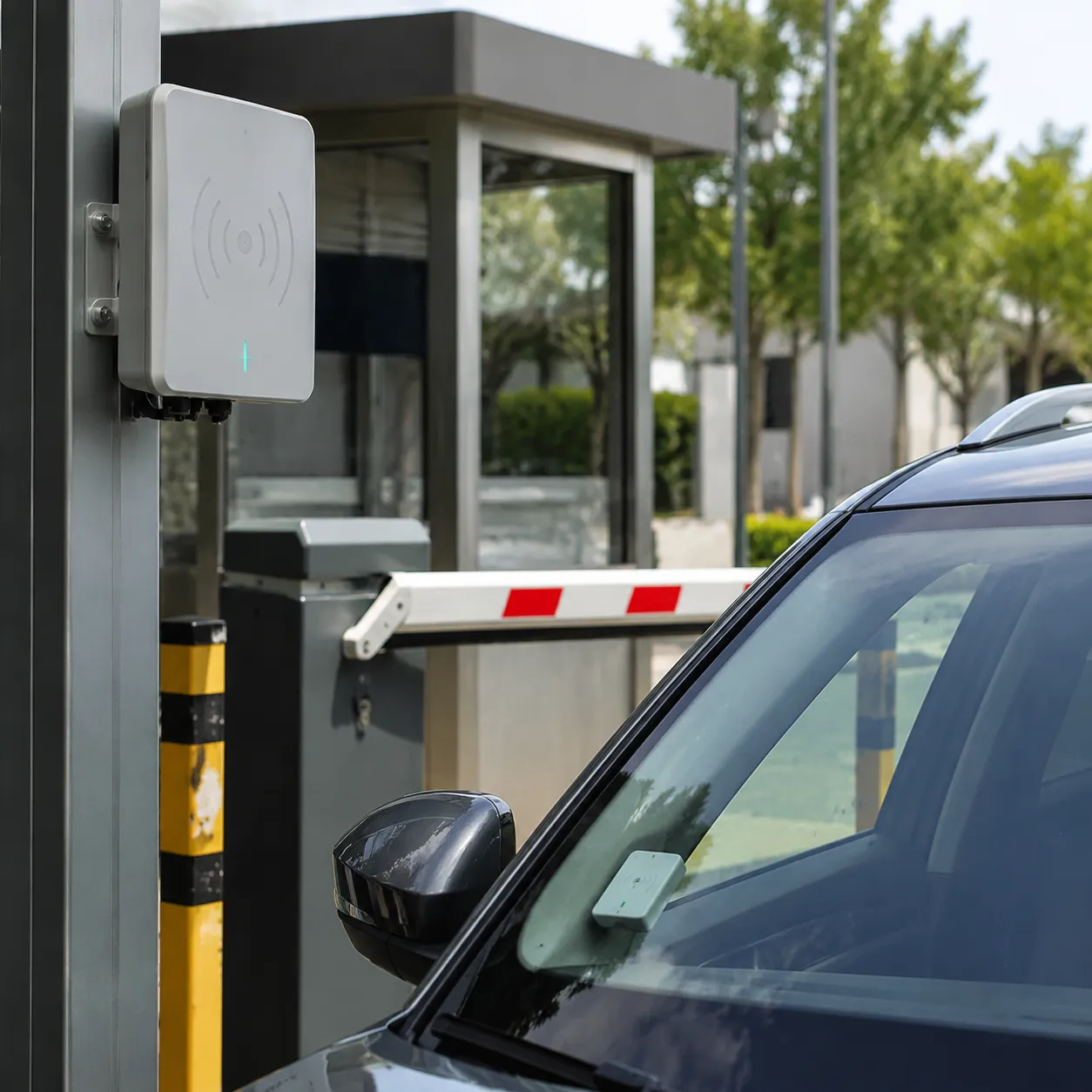
uhf rfid windshield tag programs use battery-free, passive RFID inlays tuned for interior auto glass and fixed reader portals.
- What it is: Tamper-evident RFID sticker with EPC Gen2 / ISO 18000-6C air interface for vehicle identification.
- Key spec: 860–960 MHz UHF · up to 10+ m read range · destructive antenna on removal.
- Best for: parking access control, gated entry, toll lanes, and fleet vehicle tracking with hands-free access.
Parking, Gated Entry & Vehicle Tracking Applications
Parking Access Control and Gated Entry
- Gated Communities: Grant instant gated entry without remotes, keycards, or rolling down windows.
- Automated Garages: Speed up ingress and egress in commercial parking lots using a passive vehicle RFID sticker for touchless entry and payment tracking.
Electronic Toll Collection (ETC)
- Express Lanes & Highways: Serve as a reliable electronic toll collection sticker, enabling toll systems to read vehicles accurately at highway speeds.
- Bridges & Tunnels: Reduce commuter bottlenecks and streamline automated billing with high-accuracy long range vehicle RFID tags.
Fleet Management and Dealership Tracking
- Commercial Fleets: Apply an RFID fleet tracking sticker to log vehicle dispatch times, automate yard check-ins, and track service cycles.
- Auto Dealerships & Rentals: Audit lot inventory in minutes and locate specific vehicles instantly using mobile RFID readers.
Government Vehicle Registration and Access Control
- Official Vehicle ID: Streamline state registration, tax compliance checks, and automated emissions verification.
- Secure Facilities: Manage restricted perimeter access for municipal yards, military bases, and government facilities with tamper-evident security.
Vehicle Tracking & Yard Logistics
- Perimeter checkpoints: Log ingress and egress timestamps for fleet vehicle tracking without manual gate logs.
- Shared fleets: Pair EPC IDs with license plate number records for mixed-vehicle pools at depots.
Tamper-evident substrate and glass-tuned antenna layouts determine stable read range once mounting zones are confirmed on each vehicle class.
UHF RFID Windshield Tag — Technical Specifications & Read Range
Long-Range Detection Performance
Our passive uhf rfid tag design operates battery-free while supporting hands-free access at gated portals:
- Extended read range: Accurate scans up to 10+ meters (33+ feet) in fixed reader layouts.
- Global standard: Built on EPC Gen2 / ISO 18000-6C for reader compatibility.
- Fast data transfer: High-speed response at highway approach speeds.
Tamper-Evident Auto Glass Security
Each tamper evident rfid label uses a destructive layer to block tag swapping:
- One-time use: Removing the tag rips the antenna and disables the chip.
- High-tack adhesive: Bonds to inner glass without edge lift in cabin heat cycles.
All-Weather and UV Durability
Each auto glass rfid tag targets long service life on interior glass:
- Temperature resistance: Reliable performance from -40°C to +85°C.
- UV shielding: Film stack resists solar fade on printed logos and barcodes.
Technical Specifications At a Glance
| Specification | Details |
|---|---|
| Operating Frequency | 860 - 960 MHz (Global UHF) |
| Air Interface Protocol | EPC Class 1 Gen 2 / ISO 18000-6C |
| Max Read Range | Up to 10+ meters (33 ft) — validate with reader power and portal geometry |
| Tamper Security | Destructive antenna on removal |
| Mounting Surface | Interior auto glass / windshield |
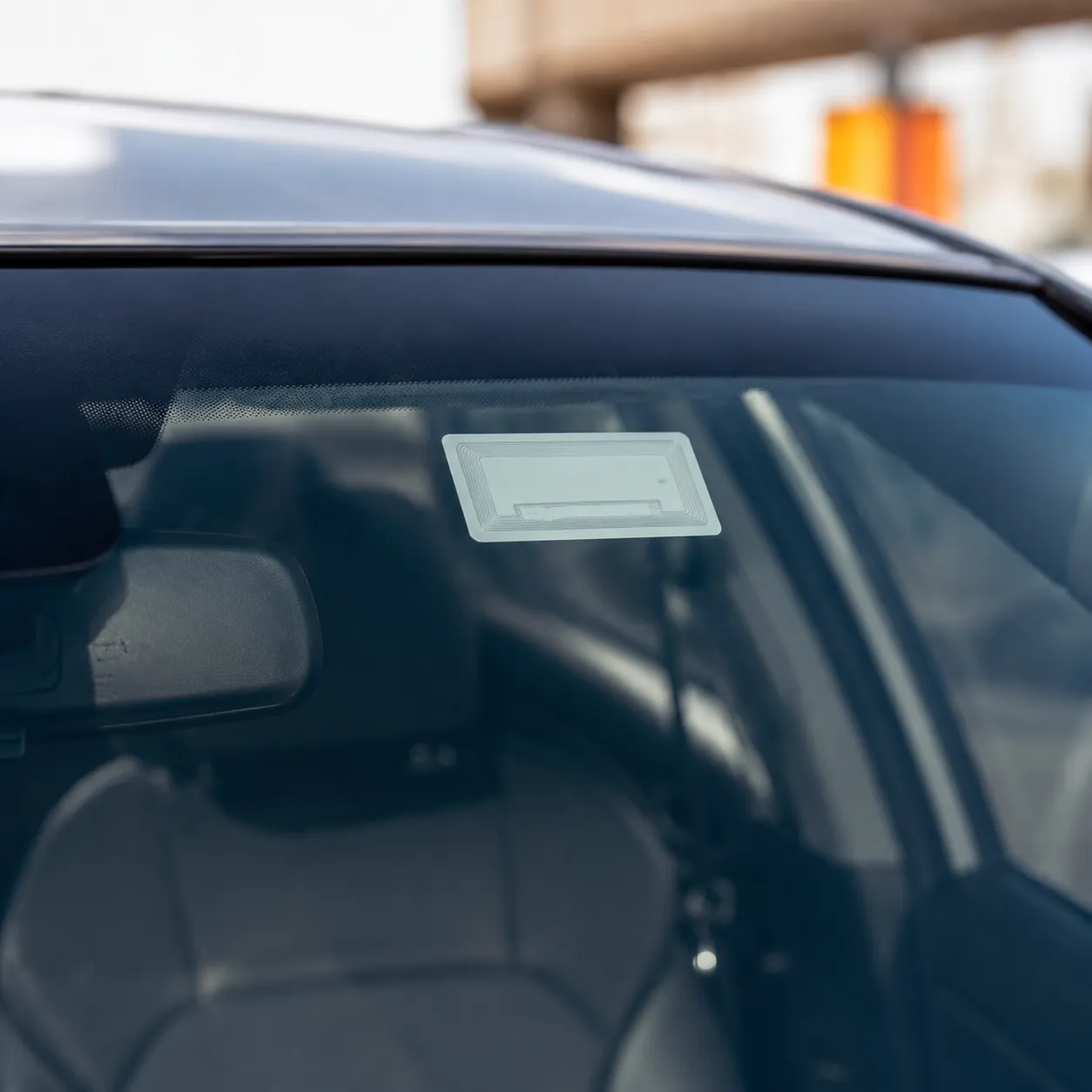
| Custom Options | Barcodes, QR codes, logo printing, EPC pre-encoding |
Custom Printing and Encoding Options
We customize every long range vehicle rfid tag order to match your existing backend system. Choose surface-printed logos, human-readable numbers, sequential barcodes, or pre-encoded memory chips straight from our factory floor.
Windshield Installation for Peak Read Range
Correct placement and surface prep maximize read range and avoid premature tamper triggers on each RFID sticker.
Windshield Surface Cleaning and Prep
Dust, oil film, and glass cleaners with wax leave residues that weaken adhesive strength. We recommend preparing the auto glass with these quick steps:
- Clean the Area: Wipe the inside glass surface thoroughly using 70% isopropyl alcohol.
- Dry Completely: Use a clean, lint-free microfiber cloth to remove all moisture.
- Check Temperature: Apply the tag when the glass temperature is between 60°F and 80°F for optimal adhesive bonding.
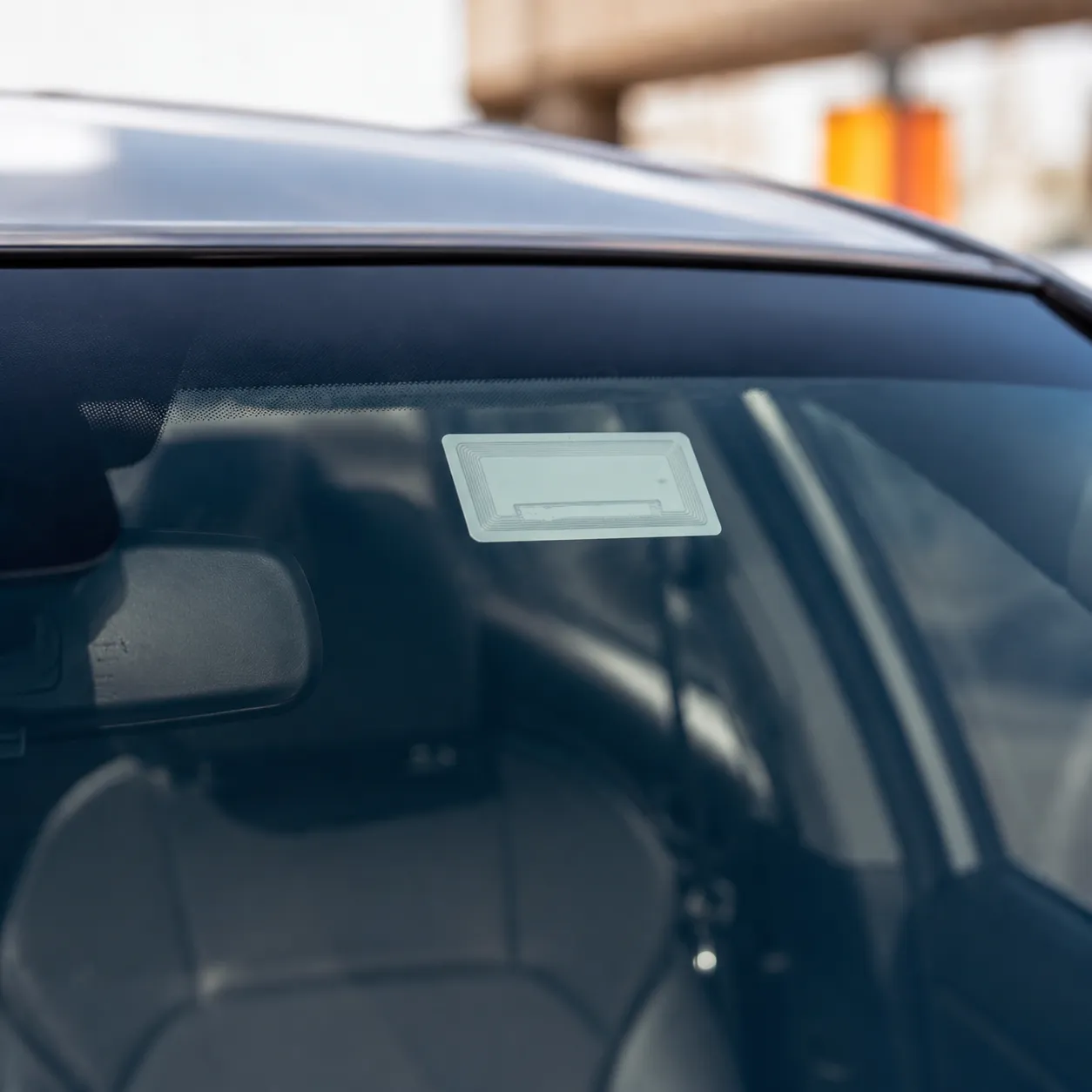
Optimal Tag Placement Location
Where you place your passive UHF RFID tag on the windshield directly impacts read rates. Metallic particles in factory glass tints and heating elements interfere with radio signals.
| Placement Zone | Suitability | Key Considerations |
|---|---|---|
| Top-Center (Behind Rearview Mirror) | Best | Keeps the tag high for overhead readers while staying clear of line-of-sight obstruction. |
| Top Driver-Side Corner | Good | Excellent option if the center area contains dense metallic film or housing sensors. |
| Metallic Tint / Sunshade Matrix | Avoid | Metal blocks radio waves, drastically cutting signal performance. |
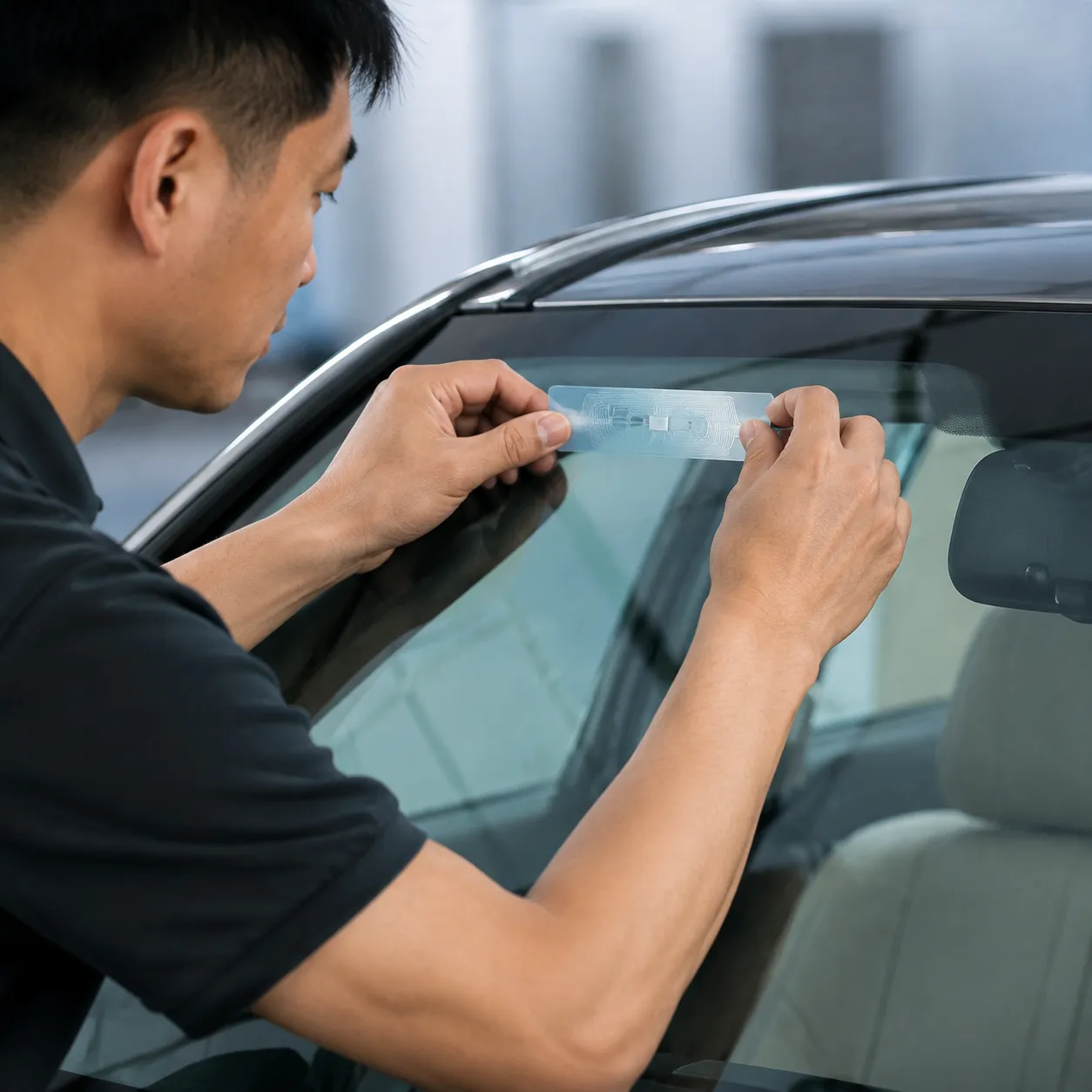
Keep the RFID sticker at least 2 inches away from the metal vehicle frame and metallic window edges. For tint and heated-glass constraints, follow our installing UHF RFID tags guide for glass mounting zones.
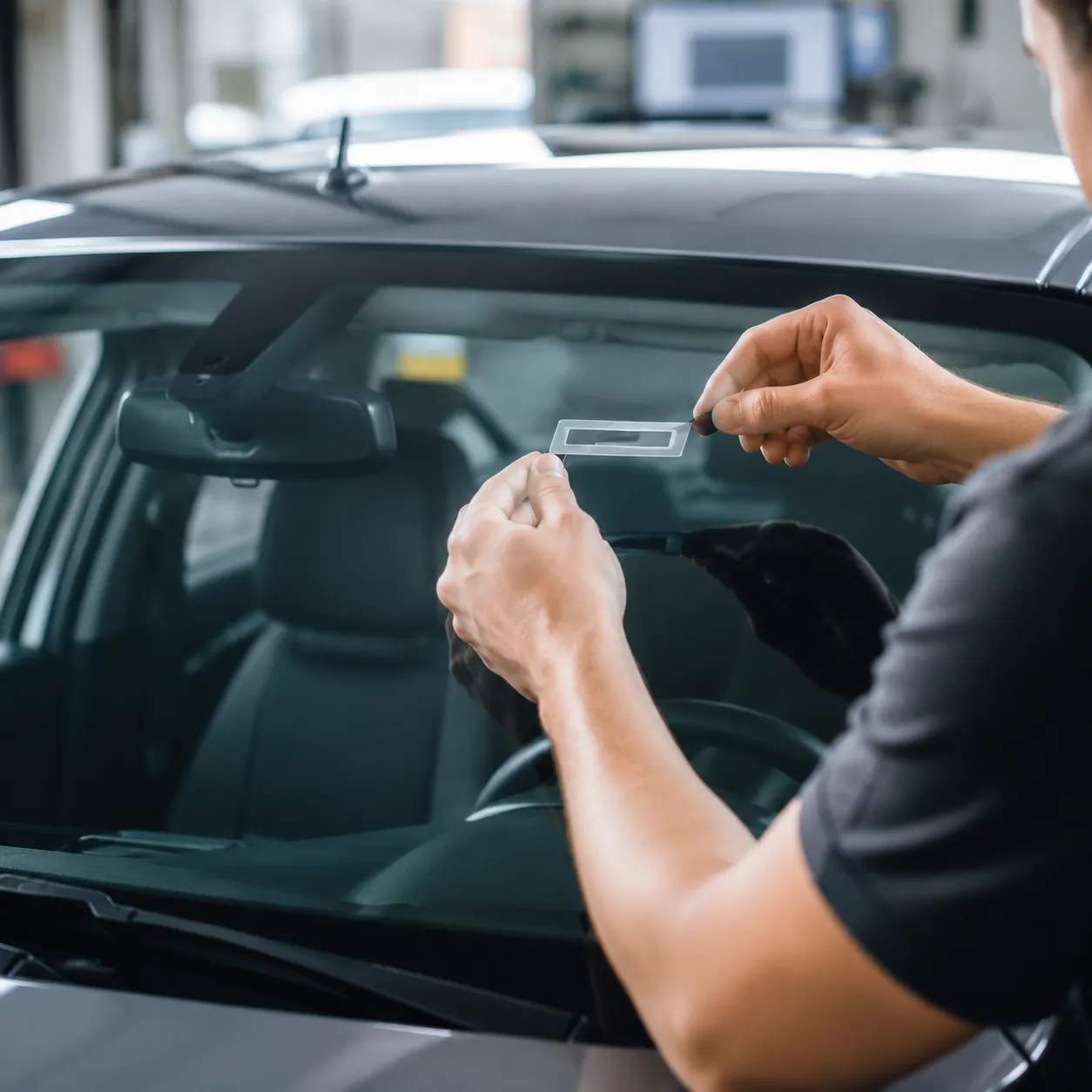
Step-by-Step Application Instructions
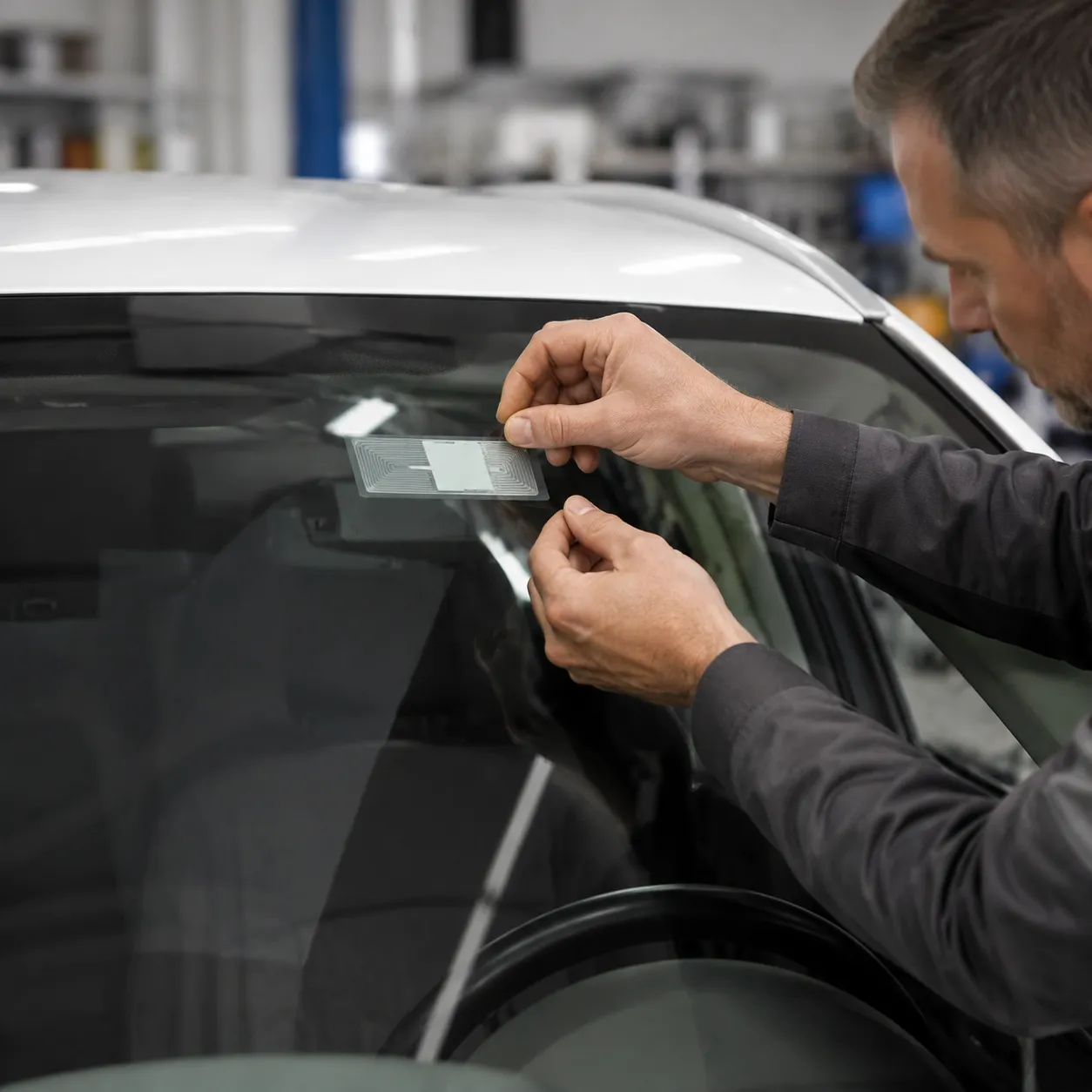
- Peel the Backing: Carefully remove the protective release liner without touching the exposed pressure-sensitive adhesive.
- Align Horizontally: Position the vehicle RFID sticker horizontally on the interior glass surface.
- Press Firmly: Apply firm, even pressure from the center out to the edges for 5–10 seconds to eliminate air bubbles.
- Set and Leave: Do not attempt to peel or shift the tag once applied. Our tamper evident RFID label designs self-destruct upon removal to prevent unauthorized transfers.
How to Select UHF Windshield RFID Tags by Frequency & Encoding
Selecting the right UHF RFID windshield tag requires matching your RFID hardware specifications, encoding needs, and regional frequency standards. We recommend evaluating three core technical factors before deploying your vehicle access or tracking system.
1. Match Regional Frequency Standards
Portal read range also depends on reader power and approach geometry — see passive UHF RFID tag range factors before locking tag SKU.
UHF RFID readers and tags must operate on the same frequency band to deliver reliable long-range performance.
| Frequency Standard | Region | Frequency Range | Typical Uses |
|---|---|---|---|
| FCC Standard | United States, Americas | 902–928 MHz | gated entry and toll lanes, parking access control, ETC |
| ETSI Standard | Europe, parts of Asia | 865–868 MHz | International fleet tracking & tolling |
For 902–928 MHz FCC deployments, pair tags and readers on the same band for optimal read range and signal strength.
2. Standard vs. Custom Printable Tags
- Standard Blank Tags: Clean, white passive UHF RFID tags ideal for high-volume setups where on-tag visual data is not needed.
- Custom Printed Labels: Customized with pre-printed company logos, barcodes, license plate numbers, or matching human-readable digits. We can pre-encode the radio frequency chip with your database numbers to simplify local installation.
3. Chip Memory Capacity and Security
All our vehicle labels follow the EPC Gen2 ISO 18000-6C standard, but memory and encryption needs vary:
- Standard EPC Memory (96-bit to 128-bit): Best for simple vehicle identification where the tag ID maps directly to cloud or local database software.
- Extended User Memory (up to 512-bit): Designed for systems storing data directly on the tag, such as access expiration dates or site privileges.
- Cloning Protection: High-security chips (such as NXP UCODE or Impinj Monza series) offer password protection and encrypted lock features to block unauthorized tagging or cloning.
- Passive vs active: Compare fixed-portal passive RFID stickers with active UHF RFID tags when you need beacon-style active tags beyond ~10 m read range.
What Is a UHF RFID Windshield Tag?
A UHF RFID windshield tag is a specialized, battery-free RFID sticker engineered for automated vehicle identification (AVI). Applied directly to the interior of an auto glass windshield, these uhf windshield rfid tags allow access control systems to instantly identify incoming vehicles—enabling smooth, hands-free access and gated entry for gated communities, parking facilities, and tollways.
How Backscatter Communication Powers Hands-Free Access
As a passive RFID device, the windshield tag contains no internal battery. Instead, it relies on backscatter technology to communicate with an external reader:
- Signal Emission: An overhead or roadside RFID reader broadcasts radio waves toward the vehicle.
- Energy Harvesting: The tag's specialized antenna absorbs the electromagnetic energy from the reader signal to instantly power up the internal radio frequency chip.
- Data Backscatter: The chip modulates and reflects (backscatters) its unique stored identification data back to the reader within milliseconds.
The 860-960 MHz Frequency for Long-Range Tracking
Operating in the ultra-high frequency (UHF) band of 860-960 MHz and adhering to EPC Gen2 / ISO 18000-6C global standards, our windshield tags provide a reliable read range of up to 10+ meters (33 feet). This high-frequency signal penetrates standard automotive glass seamlessly, authorizing fast-moving vehicles without requiring driver intervention.
Key Components of an Auto Glass RFID Tag
We manufacture our windshield RFID transponders using four high-performance layers built for harsh vehicle environments:
- Integrated Circuit (Chip): Stores encrypted vehicle identification numbers, license plate data, or user access codes.
- Tuned Antenna: Custom aluminum or copper trace engineered specifically to offset the dielectric interference of glass.
- Tamper-Evident Substrate: Built-in security layer that breaks the antenna circuit if someone attempts to peel or relocate the sticker, preventing unauthorized transfers.
- Automotive-Grade Adhesive: High-tack bonding layer resistant to direct sunlight, UV degradation, and extreme interior cabin temperatures.
Frequently Asked Questions About UHF RFID Windshield Tags
Can You Transfer a Windshield RFID Tag to Another Car?
No, you cannot. We build our uhf rfid windshield tag models with a tamper-evident release layer. If someone attempts to peel the tamper evident rfid label off the glass, the integrated aluminum antenna snaps and disables the chip immediately. This safety feature stops unauthorized tag swapping between vehicles, preventing parking access abuse and toll fraud.
How Do Tinted Windows or Heated Windshields Impact the RFID Signal?
Metallic window tints and embedded heating elements can reduce effective read range on a vehicle rfid sticker:
- Metallic tints: Metal particles shield UHF energy; ceramic or carbon tints typically do not.
- Heated glass: Mount the passive uhf rfid tag in the clear frit zone behind the rearview mirror.
What Is the Lifespan of a Passive Vehicle RFID Sticker?
Our passive RFID tags last between 5 to 10 years—often outlasting the vehicle itself. Because they are battery-free, they draw operating power directly from the electromagnetic signal sent by the reader. Crafted with UV-blocking films and weather-resistant adhesives, these labels withstand harsh summer sun, freezing winter temperatures, and glass cleaners without degrading.
How Do Passive UHF Windshield Tags Differ From Active Transponders?
The core differences come down to power source, maintenance, and overall deployment costs:
| Feature | Passive UHF Windshield Tag | Active Transponder |
|---|---|---|
| Power Source | Battery-free (energized by reader signal) | Internal battery required |
| Lifespan | 5 to 10+ years | 3 to 5 years (battery dependent) |
| Maintenance | Zero maintenance required | Requires battery replacement or unit swaps |
| Hardware Cost | Cost-effective for large fleets and residents | Expensive individual unit cost |
| Read Range | Up to 33+ feet (10+ meters) | 100+ feet (30+ meters) |
What read range should I expect at a parking gate?
Fixed reader layouts typically achieve 8–10+ meters (25–33 ft) on clear glass with FCC-band portals. Validate with your antenna height, transmit power, and vehicle approach angle before rolling out uhf windshield rfid tags across an entire community or garage.
Share windshield tint type, regional frequency band, EPC encoding, and annual volume for configured uhf windshield rfid tags—Contact JN RFID with sample vehicle photos and fixed reader layout specs for parking access control pilots.