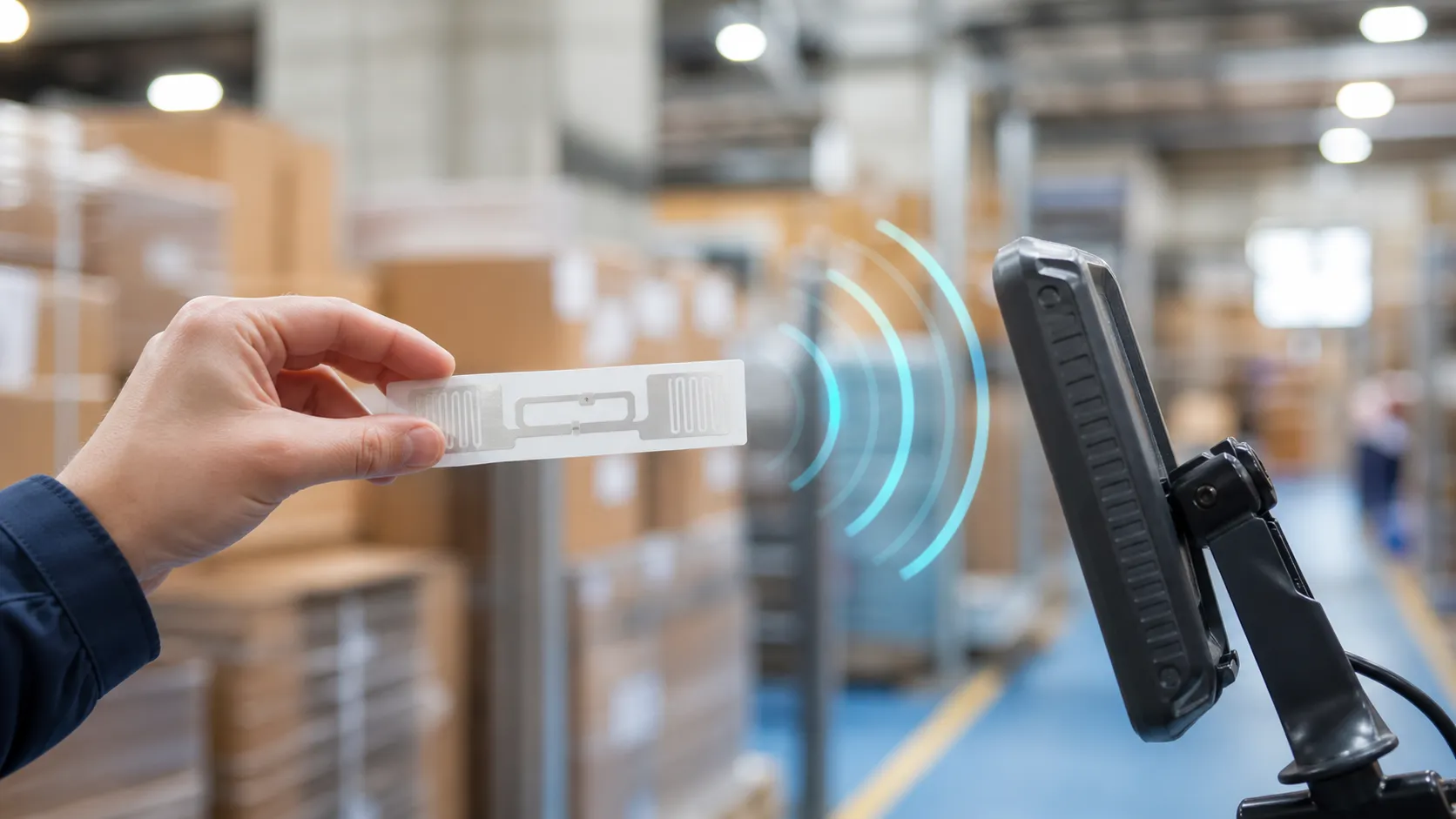

The rfid blocking card problem is not one failure mode—it spans skimming risk, card clash, weak frequency attenuation, and unreliable bulk supply. We build blocking cards for B2B buyers who need verified data protection, not fear-based marketing alone. The sections below cover real causes, commercial traps, engineering fixes, field testing, and deployment paths for banks, corporates, and hospitality.
Is the RFID Blocking Card Problem a Real Threat?
Every day, clients ask us a straightforward question: is wireless theft actually happening, or is the rfid blocking card problem just marketing hype?
The Science of Electronic Pickpocketing
The threat stems from how high-frequency (13.56 MHz) NFC chip technology operates.[1] Standard contactless credit cards and passports transmit data wirelessly via radio waves. When an unauthorized rfid reader or a modified card skimmer gets within a few inches of your pocket, it can bounce a signal off your card to extract your payment details or identity data. This digital compromise is what the industry calls electronic pickpocketing.
What is Truly at Risk
Not all cards are vulnerable, but the ones that are carry high stakes:
- Contactless Payment Cards: Modern credit and debit cards utilizing tap-to-pay functionality.
- e-Passports: Government-issued identification cards carrying encrypted personal biometric data.
- Corporate Access Badges: Smart keys used for secure building entries that can be cloned to breach corporate networks.
While standard magnetic stripe cards are immune to radio frequency threats, your high-value contactless financial assets and private data protection remain firmly on the frontline. Protecting these touchpoints requires a reliable, engineered defense strategy.
RFID Blocking Card Safety: What B2B Buyers Should Verify
Consumer media often frames rfid blocking card safety as an all-or-nothing debate. Some analysts argue that remote credit card fraud via electronic pickpocketing remains rare compared with online scams and physical card loss.[3] That does not mean blocking gear is useless—it means procurement teams must match the product to the threat model.
For high-density transit hubs, corporate travel programs, and bank welcome kits, passive shielding or active scanner jamming still closes a real gap when cards stay in a thin rfid wallet without a protective sleeve. The safety question is not whether to block, but whether the card you source delivers measurable signal interference at 13.56 MHz without creating new wallet failures. We treat identity theft prevention as a specification problem: attenuation curves, batch test logs, and material durability—not slogan printing alone.[2]
The Core Technical RFID Blocking Card Problem
When your clients deploy standard protective gear, they quickly run into the reality of the rfid blocking card problem. It isn’t just about stopping a signal; it is about how these cards behave in a crowded wallet. As a manufacturer, we see three distinct technical failures that frustrate end-users and compromise data protection.
Problem 1: The Card Clash Phenomenon
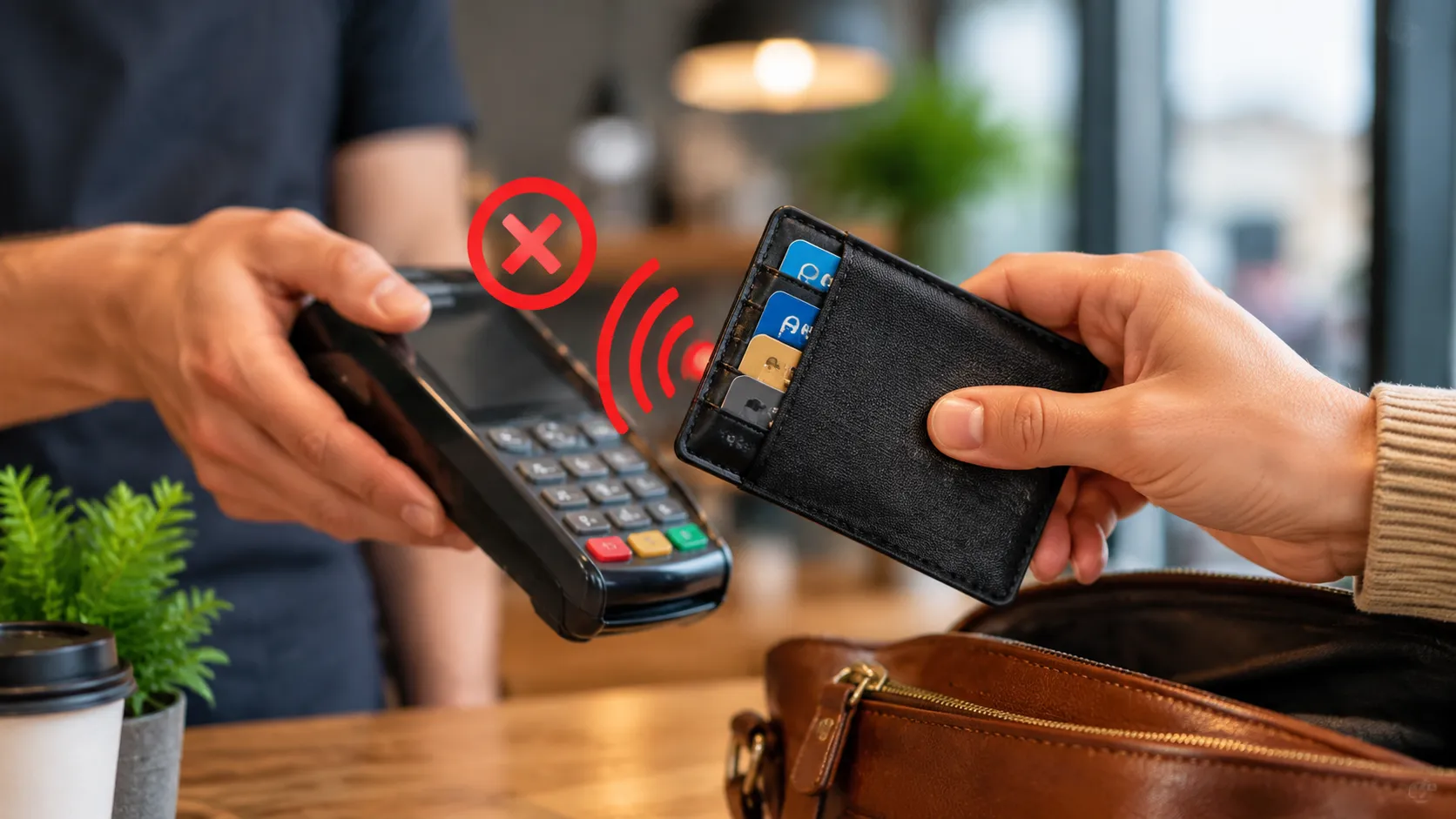
When multiple contactless payment cards or transit passes sit next to each other, a standard rfid reader gets confused. It tries to communicate with every NFC chip simultaneously. Instead of blocking the threat, a low-grade shield often worsens this card clash by trapping the internal signals, causing payment terminal errors or total transaction failure at transit turnstiles.
Problem 2: Inadequate Signal Attenuation
Many cheap sleeves and cards fail at basic frequency attenuation. They do not offer the complete Faraday cage effect needed to drop the signal strength to zero.
| Shielding Type | Attenuation Performance | Risk Level |
|---|---|---|
| Low-Spec Aluminum Film | Under 10 dB reduction | High (Scanner can still read data) |
| Standard Passive Shielding | 15 to 25 dB reduction | Moderate (Vulnerable to high-power readers) |
| Industrial Tuning (Ours) | Greater than 40 dB reduction | Zero Risk (Total signal interference) |
Without proper signal attenuation, a high-powered card skimmer can punch right through the barrier and pull data from a distance.
Problem 3: The Myth of Magnetic Stripe Destruction
A common worry among US consumers is whether an active scanner jamming card will ruin the magnetic stripe on their traditional credit cards. Cheaply made active cards can emit an uncontrolled electromagnetic field that risks de-magnetizing nearby cards. True electronic pickpocketing protection must isolate the high-frequency NFC chip bandwidth without generating a destructive magnetic field.
The Commercial RFID Blocking Card Problem
The Flaws of Low-Spec Manufacturing
Most factory-standard blocking cards rely on cheap, passive shielding materials that are sloppily sandwiched between thin plastic layers.
- Uneven Shielding Layers: Poor quality control leads to gaps in the internal protective mesh.
- Weak Scanner Jamming: Cheap cards fail to create a strong enough Faraday cage effect, allowing powerful modern RFID readers to bypass the shield entirely.
- High Failure Rates: Out-of-the-box defect rates from low-end suppliers are notoriously high, meaning you are paying for cards that simply do not work.
The Material Lifespan Issue
A reliable product needs to survive inside a tight US wallet, but everyday wear and tear easily destroys low-spec alternatives.
| Failure Point | Low-Spec Commercial Cards | High-End Industrial Standard |
|---|---|---|
| Bending & Flexing | Internal shielding cracks and loses frequency attenuation | Flexible, reinforced core maintains signal interference protection |
| Heat Exposure | Layers delaminate and warp in hot cars or pockets | High-grade PVC/PET composite resists temperature deformation |
| Daily Friction | Edges split, exposing the internal NFC chip jamming components | Sealed, flush-edge bonding prevents physical breakdown |
The Total Lack of Standards
The biggest legal and technical hurdle in the current market is the complete lack of universal manufacturing standards for consumer-grade RFID safety products.
The Reality: Anyone can print "RFID Protection" on a piece of plastic without testing it against actual contactless payment frequencies (like 13.56 MHz).
Without official certifications or strict benchmark testing, buying cheap promotional-grade blocking cards means risking your brand's reputation on unverified security.
How Industrial Engineering Solves the RFID Blocking Card Problem
We look at the RFID blocking card problem from a pure engineering perspective. Low-end consumer cards rely on passive, thin aluminum layers that quickly fail. True commercial signal attenuation requires advanced industrial manufacturing to create a reliable Faraday cage effect. We engineer our blocking cards to actively disrupt unauthorized scans, ensuring enterprise-grade data protection.
Principles of Commercial Signal Attenuation
Standard protective sleeves are bulky and impractical for everyday US consumers. We solve this by embedding a micro-thin, high-density alloy matrix directly into the card core.
- Active Deflection: When an unauthorized card skimmer sends out a signal, our card absorbs the energy and broadcasts a scramble signal.
- Scanner Jamming: This process instantly blocks the 13.56 MHz frequency used by contactless payment systems and smart IDs.
- Zero Battery Dependency: The card draws power directly from the rogue RFID reader, meaning it never needs charging and will not degrade over time.
Precise Frequency Tuning
Cheap promotional cards often block the wrong frequencies or fail under strong signals. Our industrial engineering process targets the exact frequency attenuation needed to protect modern NFC chips without causing permanent card clash inside a user's wallet.
| Targeted Frequency | Affected Card Types | Engineering Mechanism |
|---|---|---|
| 13.56 MHz (High-Frequency) | Credit cards, passports, smart access badges | Active frequency jamming matrix |
| 125 kHz (Low-Frequency) | Older building entry fobs, proximity cards | Passive absorption layering |
The B2B Production Standard
We build our security products to withstand real-world wear and tear. Every batch undergoes strict testing to guarantee that the signal interference remains absolute under high-power scanner pressure. We deliver consistent, certified shielding materials that protect your brand's reputation and your clients' sensitive financial data.
How Manufacturing QA Eliminates RFID Blocking Card Failures
We design our products to solve the most frustrating rfid blocking card problem plaguing B2B buyers today: unexpected field failures. When you deploy thousands of security cards to corporate clients or hotel guests, a high defect rate destroys your brand reputation. We eliminate that risk entirely by focusing on elite manufacturing standards.
Here is exactly how we build reliability into every single batch:
100% Total Batch Inspection
While other suppliers rely on random spot-checking, we test every single piece. Our automated testing rigs simulate real-world rfid reader proximity to guarantee the scanner jamming circuitry triggers perfectly every time. If a card doesn't offer total data protection, it never leaves our facility.
Premium Material Architecture
Low-grade plastic warps and cracks, breaking the internal antenna and causing a sudden rfid blocking card problem. We use high-grade, resilient PVC and PETG composite layers. This rigid core protects the embedded NFC chip and shielding matrix from everyday bending and friction.
Enterprise-Grade Customization
Security products should still match your brand aesthetic. We offer full-bleed CMYK printing, custom laser engraving, and matte or glossy finishes. Your logo looks sharp while the internal hardware handles the heavy lifting of wireless theft prevention.
Certified Compliance Ecosystem
Our cards are fully tested against major industry standards to ensure strict frequency attenuation. We provide verified compliance data so your procurement team can buy with absolute confidence.
Technical Specifications Matrix
| Feature | Our Standard | Cheap Alternatives | Benefit to Your Business |
|---|---|---|---|
| Inspection Protocol | 100% total batch inspection | 3% to 5% random sampling | Zero dead-on-arrival (DOA) cards |
| Shielding Material | Multi-layered RFID shielding materials | Basic aluminum foil paper | Superior commercial signal attenuation |
| Core Lifespan | 5+ Years | Less than 12 months | Reduced replacement costs |
| Signal Blocking | Dynamic signal interference (13.56 MHz) | Passive, weak absorption | Complete contactless payment protection |

How to Field-Test RFID Blocking Card Performance
Procurement teams should not trust packaging claims alone. Independent forums and security testers recommend simple proximity checks before you roll out thousands of units.[4] We mirror those steps in our factory rigs and share the same logic with B2B partners evaluating a blocking card against real reader pressure.
| Test Method | Setup | Pass Criteria |
|---|---|---|
| Tap-to-Pay Terminal | Place the blocking card between a contactless credit card and a retail NFC terminal. | Payment must not authorize while the blocker is active. |
| 13.56 MHz Reader Sweep | Use a trusted handheld rfid reader or phone-based NFC diagnostic tool at close range. | Reader returns no card data; LED or app shows zero response. |
| Multi-Card Wallet Simulation | Stack two payment cards plus one blocker inside a closed rfid wallet. | Terminal reads only the intended card—no card clash or double-charge. |
Blocking is rarely absolute blocking in the marketing sense—it is frequency attenuation strong enough that a reader cannot complete an exchange. Document pass/fail photos and reader logs for each SKU before you approve a bulk shipment.
Strategic Applications for B2B Buyers
As an experienced RFID manufacturer, we know that integrating protection directly into your distribution pipeline solves the end-user rfid blocking card problem before it even starts.
Custom Corporate Security Gifts
Modern corporate gifting needs to be functional, not clutter. Standard promotional items get thrown away, but data protection is a high-value priority for American employees and clients traveling or commuting in high-density areas.
Premium Brand Alignment: Custom-printed blocking cards act as a walking billboard for your commitment to security.
Practical Utility: Fits seamlessly into any standard rfid wallet or badge holder.
Turnkey Security: A tangible way to show clients and staff that you take identity theft and wireless security seriously.
Banking and Financial Institutional Distribution
With contactless payment now the standard across the US, banks and credit unions face mounting pressure to address consumer fears surrounding credit card fraud and electronic pickpocketing.
| Distribution Model | Operational Benefit | Customer Impact |
|---|---|---|
| New Account Kits | Lowers card activation churn | Builds instant trust from day one |
| Premium Tier Perks | High perceived value for zero footprint | Keeps your card top-of-wallet |
| Direct Mail Add-ons | Inexpensive security upgrade | Proactively mitigates fraud claims |
By shielding the NFC chip embedded in modern debit and credit cards, financial institutions can directly reduce unauthorized scanner scanning and subsequent chargeback losses.
Hospitality and Event Access
Smart hotels and large-scale venues use RFID keycards for seamless guest entry. However, signal interference and accidental credential reading can cause massive deployment failures at the turnstile or guest room door.
We supply high-performance blocking cards engineered specifically for the hospitality sector. Placing our specialized shielding cards into guest welcome packets prevents the accidental card clash that happens when a guest keeps their room key right next to their transit pass or corporate badge. It stops scanner jamming in its tracks, ensuring smooth access control and reducing expensive front-desk reprogramming bottlenecks.
Whether you need OEM blocking cards, bulk RFID blocking cards, or a custom print run, request a quote with your target attenuation spec and batch size.