How long do rfid blocking cards last? Most passive blocking cards keep working for 5–10 years because they use passive technology with no sealed batteries—until bending or wear breaks the internal antenna or microchip. Active jammers may need replacement every 2–5 years when internal power dies. Below we cover expiration date myths, daily rfid wallets wear, field tests, and when to replace your credit card shield.
How RFID Blocking Cards Work
Contactless payment makes life incredibly easy, but it also opens the door to potential threats like identity theft and electronic pickpocketing. If you use bank cards with tap-to-pay features, a bad actor with a high-tech scanner or a modified device like a Flipper Zero can technically pull your information right through your pocket. That is where credit card scanner protection comes in.
To stop unauthorized scanning, you need to understand exactly how we design these shields to interrupt the transaction.
Understanding RFID Technology and Signal Interference
Radio-Frequency Identification (RFID) relies on two main pieces inside your contactless card: a tiny microchip that holds your data and an antenna loop that picks up radio waves. When you place your card near a contactless payment terminal, the terminal emits an electromagnetic field. Your card draws power from that field to transmit your payment info.
RFID blocking cards work by exploiting this loop (how RFID blocking works). They introduce intentional signal interference to confuse or block the communication pathway between the reader and your card.
Passive vs Active RFID Blocker
Skimming protection devices fall into two main categories:
| Protection Type | Mechanism | Power Source |
|---|---|---|
| Passive Technology | Absorbs or deflects the radio waves. Uses material like aluminum or carbon fiber to create a Faraday cage. | None (No batteries required) |
| Active Technology | Detects an incoming scanner signal and emits a micro-jamming signal to scramble the data request. | Draws dynamic power from the scanner's own radio energy |
How Blocking Cards Shield Your Credit Card Data
When you slip an RFID protection card into your wallet, it acts as a dedicated bodyguard for your financial data.
- The Shielding Zone: A passive card creates a physical wall that absorbs the 13.56 MHz frequency used by modern bank cards.
- Signal Jamming: An active blocking card intercepts incoming energy from a rogue scanner, powers up instantly, and outputs an unreadable gibberish signal.
This ensures that any digital skimming scams fail instantly before the scanner can read a single digit of your credit card details.
How Long Do RFID Blocking Cards Last?
How long do RFID blocking cards last? The quick answer depends entirely on whether you are using a passive or active shield. Because these cards do not have a traditional expiration date printed on the plastic, understanding the technology inside helps you know when to swap them out.
Average Lifespan of Passive RFID Blocking Cards
Passive technology is built to last. These cards do not require an internal power source; instead, they absorb the energy sent out by an unauthorized scanning device to scramble the signal.
- Expected Lifespan: 5 to 10 years.
- Why they last: With no internal batteries to drain, a passive card works indefinitely as long as the internal antenna remains intact.
- The real limit: Their actual life expectancy matches the physical durability of the plastic. Once the card bends, cracks, or snaps, the internal circuitry breaks, and your credit card scanner protection drops to zero.
How Long Do Active RFID Blocker Cards Last?
Active shields take a different approach to contactless card fraud prevention. They use a microchip and an internal power source to deploy an active signal jamming field when electronic pickpocketing is detected.
- Expected Lifespan: 2 to 5 years.
- The battery bottleneck: These cards rely on ultra-thin, built-in batteries. Once the power drains, the active jamming stops working.
- Replacement timeline: Because the batteries are sealed inside the plastic shell, they cannot be recharged or replaced. When the power dies, the entire skimming protection device must be replaced.
Do RFID Blocking Cards Expire?
Unlike bank cards, RFID protection cards do not have a hard calendar expiration date. They won't suddenly stop working on the first of the month.
| Card Type | Internal Power | Expiration Style | Primary Failure Cause |
|---|---|---|---|
| Passive Blocker | None (Uses scanner's energy) | Functional only | Physical snapping, deep creases, heavy wear |
| Active Blocker | Built-in battery | Battery depletion | Battery death (typically within 5 years) |
To keep your wallet safe from identity theft and skimming scams, we recommend replacing active cards every 3 years and swapping out passive cards the moment the plastic shows visible signs of deep bending or cracking.
Factors That Affect How Long RFID Blocking Cards Last
How long do rfid blocking cards last? The answer heavily depends on how you treat your wallet. While the internal tech doesn't just expire, everyday habits and physical environments will impact your RFID wallet durability over time.
Physical Wear and Tear from Daily Wallet Use
Sitting on your wallet, cramming it into tight pockets, and constantly sliding cards in and out creates friction. Over time, this mechanical stress can micro-crack the internal components.
Exposure to Water, Bending, and Extreme Temperatures
- Bending: Repeated flexing snaps the internal connections. If you carry your wallet in your back pocket, you are actively shortening your credit card scanner protection lifespan.
- Moisture: Standard passive cards handle a splash, but submersion can delaminate the card layers and ruin the internal circuitry.
- Extreme Heat: Leaving your wallet on a hot car dashboard in the summer warping the plastic, which instantly destroys the internal shield.
Antenna Damage Over Time
Unlike traditional bank cards, you don't have to worry about traditional demagnetization because these cards don't rely on magnetic strips. Instead, the real danger is internal antenna damage.
| Threat Factor | Impact on Tech | Risk Level |
|---|---|---|
| Severe Bending | Snaps the internal antenna loop | High |
| Deep Scratches | Cuts through the protective plastic layer | Medium |
| High Heat | Melts and warps the internal microchip | High |
Once the internal antenna breaks, your defense against unauthorized scanning and electronic pickpocketing drops to zero. If the card loses its structural integrity, it can no longer successfully disrupt a skimming scam.
How to Tell If Your RFID Blocking Card Is Still Working
You can't see radio waves, so you need practical ways to verify your credit card scanner protection is still active.
Testing Your Card at a Store Checkout
The absolute easiest way to check your skimming protection device is during a normal contactless payment at a grocery store or retail terminal—the same field checks described in our real-world RFID blocking tests guide.
- The Sandwich Test: Place your credit card directly behind your RFID blocker inside your wallet.
- The Tap: Tap your wallet against the checkout reader.
- The Result: If the terminal reads your bank cards and processes the payment, your blocking card is no longer doing its job. If the terminal throws an error or fails to detect your card entirely, the shield is working perfectly.

Using Smartphone Apps to Check RFID Signal Strength
If you want to test your protection at home, you can turn your smartphone into a makeshift skimming device.
- Download an NFC Reader App: Search for a free NFC card reader app on the App Store or Google Play.
- Scan Your Credit Card: Hold your naked bank card against the back of your phone. The phone should buzz or display your card data.
- Introduce the Blocker: Sandwich your credit card with the RFID blocking card and try scanning again.
- Verify the Block: If the app can no longer detect the microchip or read the antenna data, your card is safe from unauthorized scanning and electronic pickpocketing. This test even confirms protection against advanced hacking tools like the Flipper Zero.
Signs of Physical Damage
Sometimes a visual inspection is all you need. Since passive technology relies on an internal loop antenna to disrupt signals, physical integrity is everything. It is time for a replacement if you notice any of the following:
| Damage Type | What It Means for Protection | Action Required |
|---|---|---|
| Deep Creases or Bends | The internal antenna or loop circuit is likely snapped. | Replace immediately. |
| Delamination / Peeling | Moisture can seep in and corrode the internal components. | Replace soon. |
| Cracked Edges | The protective barrier is compromised, reducing signal jamming efficiency. | Replace immediately. |
Maximizing the Lifespan of Your RFID Card
Getting the most out of your skimming protection device comes down to how you treat your wallet. Follow these structural habits to ensure your contactless card fraud prevention stays active for years.
Proper Wallet Placement for Optimal Protection
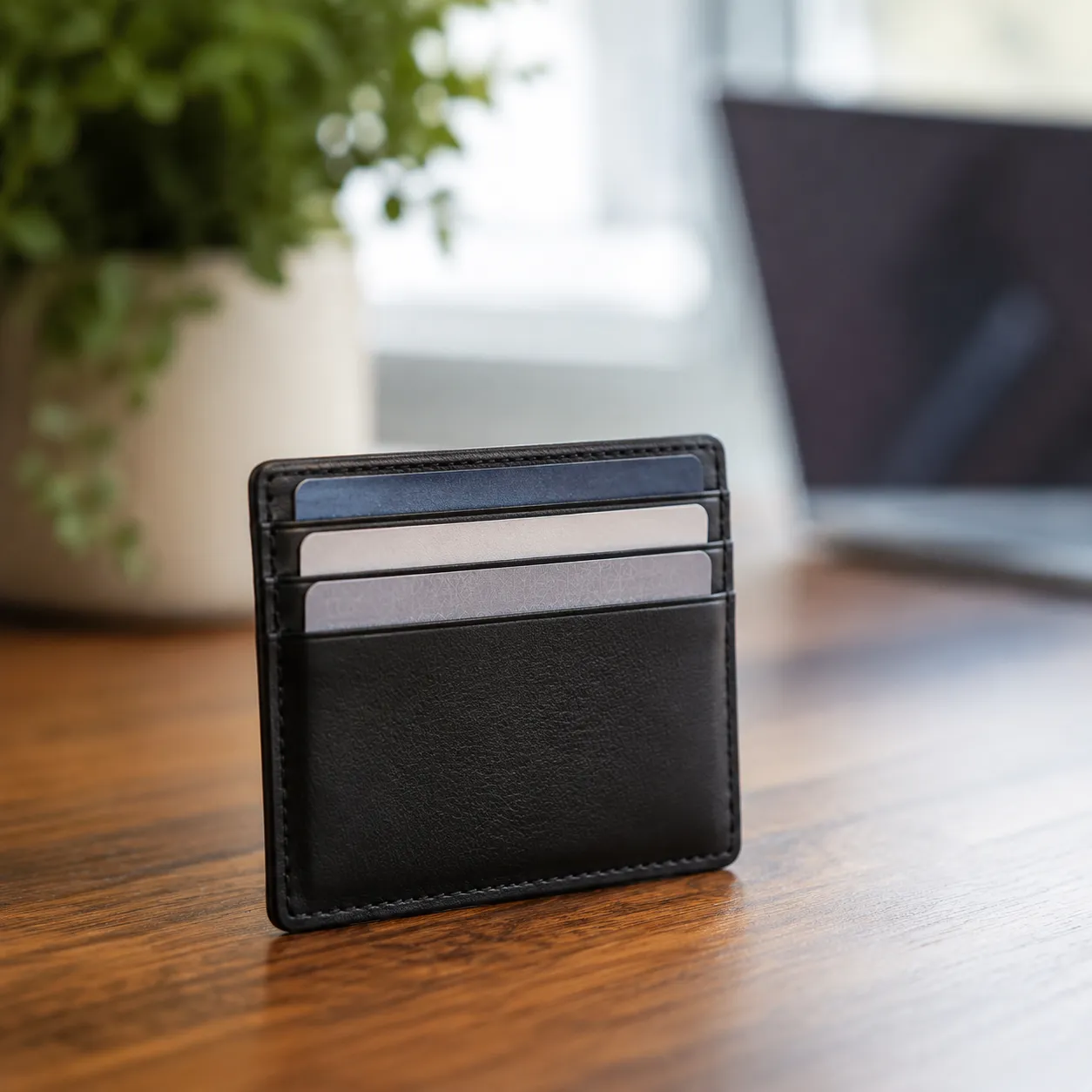
An RFID protection card only works if it sits in the right spot relative to your bank cards. To ensure your credit card scanner protection handles unauthorized scanning efficiently, use the "sandwich" method.
- Single Blocker Setup: Place your RFID blocking card directly in front of or behind your most sensitive contactless payment cards.
- Dual Blocker Setup: For thick or trifold rfid wallets, place one blocker card at the very front slot and a second one at the very back slot.
- The Shielding Zone: Keep your credit cards within 1 to 2 centimeters of the blocking card to maintain a secure signal jamming perimeter.
Tips to Prevent Physical Damage and Bending
Passive technology relies on a perfectly intact internal antenna and microchip—see our durable RFID blocking card spec for lamination built for daily wallet flex. Physical abuse is the number one reason an RFID protection card lifespan gets cut short.
- Avoid the Back Pocket: Sitting on your wallet bends the card, snapping the internal antenna loop over time. Move your wallet to your front pocket.
- Clean Out the Grit: Tiny pieces of dirt and debris inside wallet slots act like sandpaper, scraping the protective outer layers of the card.
- Keep It Cool: Avoid leaving your wallet on a hot car dashboard. Extreme heat warps the plastic layers, separating the internal circuitry.
When Should You Proactively Replace Your RFID Blocker?
You shouldn't wait for electronic pickpocketing or identity theft to happen before realizing your card failed. Since internal micro-cracks are invisible to the naked eye, we recommend a firm replacement schedule based on your usage habits.
| Wallet Type | Daily Usage Habit | Recommended Replacement |
|---|---|---|
| Front Pocket / Slim Wallet | Low friction, minimal bending | Every 3 to 5 Years |
| Back Pocket Bifold | High pressure, frequent bending | Every 2 Years |
| Tactical / Hard Shell Wallet | Rigid protection, low wear | Up to 5 Years |

If your card suffers a deep crease, severe water exposure, or major surface scratches, replace it immediately to maintain total protection against skimming scams.
FAQs About RFID Blocking Card Lifespan
Can an RFID blocking card lose its effectiveness?
Yes, it can. While the internal tech doesn't expire, physical damage can ruin it. If the inner antenna snaps from bending your wallet, or if severe scratches destroy the internal microchip, the skimming protection device will stop working.
Do I need to charge my RFID blocking card?
It depends on the tech you choose.
Passive technology: No charging required. These cards draw energy directly from the unauthorized scanning signal to jam it. They last indefinitely until physically damaged.
Active RFID blocker: These rely on internal batteries to emit a continuous signal jamming field. They typically last 3 to 5 years before the battery dies and the card needs replacing.
Does water ruin an RFID blocking card?
Standard moisture won't hurt it, but prolonged exposure will. We laminate these cards to be highly water-resistant. However, if water gets trapped inside your wallet for days, it can delaminate the plastic layers, corrode the microchip, and cause RFID wallet durability to drop significantly.
How many credit cards can one RFID blocker protect at once?
A single card offers a specific coverage zone, usually creating a 10mm to 20mm protective sandwich grid.
| Blocker Placement | Number of Bank Cards Protected |
|---|---|
| Single Card (Front) | Protects 1–3 stacked credit cards directly behind it |
| Sandwich Method (1 Front + 1 Back) | Protects up to 6–8 bank cards layered between them |
For complete contactless card fraud prevention with a slim wallet insert blocker against advanced tools like a Flipper Zero, we recommend placing your most sensitive payment cards directly next to the blocker.