Overview
860–960 MHz · EPC Class 1 Gen 2 / ISO 18000-6C · Alien H3 chip · up to 12 m long read range
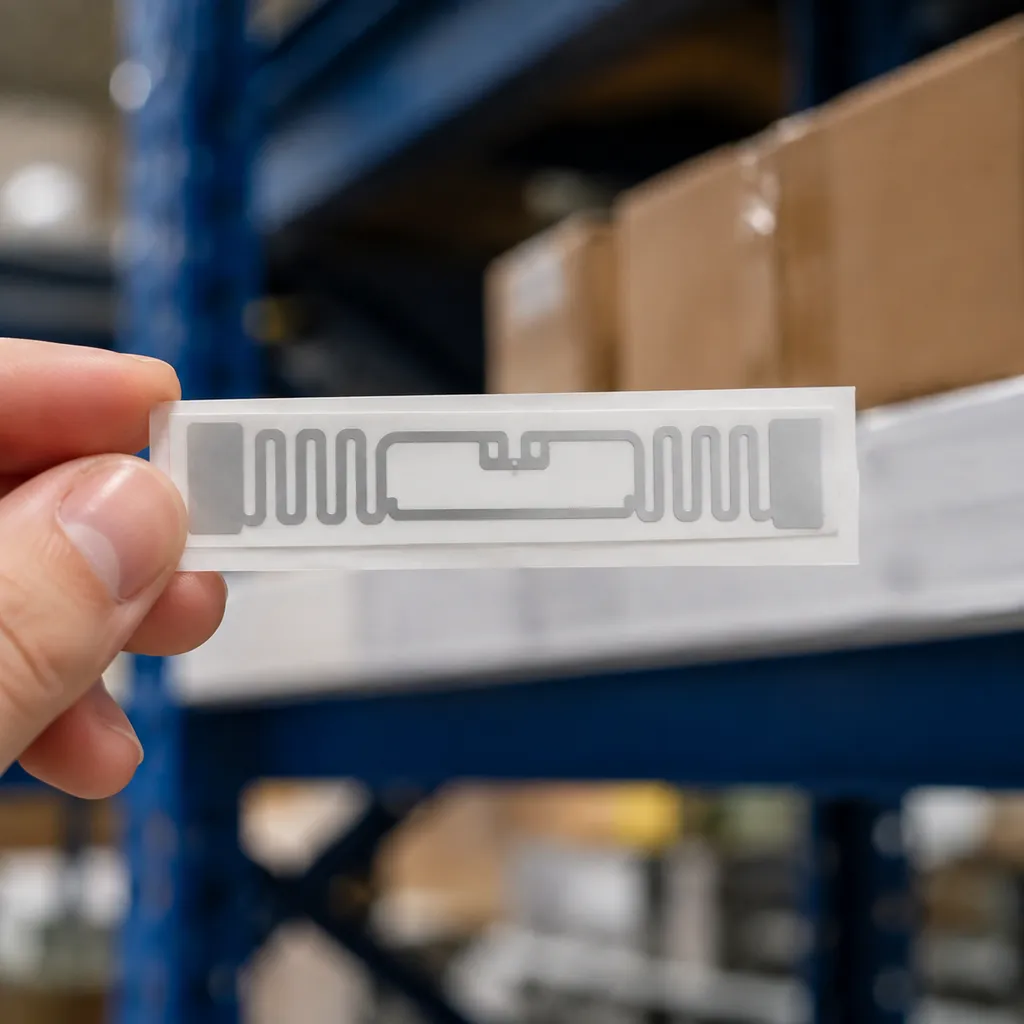
Number printing labeling with double side printing, barcode printing, and factory label encoding on durable PET material
860mhz - 960mhz uhf rfid windshield tag number printing labeling for vehicle identification, parking management, toll collection, and fleet asset tracking lanes.
How 860MHz - 960MHz UHF RFID Windshield Tags Work
860mhz - 960mhz uhf rfid windshield tag number printing labeling platforms use passive transponder antenna integration tuned for glass-mounted vehicle identification at gates and gantries.
Global EPC Class 1 Gen 2 Protocol
Our tags utilize the universal EPC Class 1 Gen 2 and ISO 18000-6C communication standards, operating smoothly within the global 860-960 MHz frequency range.
- Frequency Tuning: Engineered for optimized operation across North American (902–928 MHz) and worldwide RFID bands.
- High Data Rates: Fast chip response speeds enable reliable reads on moving vehicles at entry points and toll gantries.
Passive Transponder Architecture & Read Range
As a battery-free passive windshield RFID sticker, the tag draws operational power directly from the reader’s radio frequency signal.
| Core Specification | Feature Detail |
|---|---|
| IC Architecture | High-sensitivity ICs, including the Alien H3 chip |
| Read Range | Extended distance up to 12 meters (40 feet) |
| Power Supply | Passive RF signal harvesting (zero battery replacement) |
| Layer Structure | Durable, multi-layer PET material with specialized adhesives |
Precision antenna integration aligns with Gen 2 UHF RFID tags and EPC Gen 2 passive UHF RFID tag reference builds; integration maximizes signal transmission through glass surfaces, ensuring dependable long range RFID vehicle identification even under demanding weather conditions.
Anti-Tamper & Non-Transferable Security Design
To stop unauthorized tag swapping and prevent credential sharing across unauthorized vehicles, advanced destructive layers directly into the anti-tamper windshield tag.
- Destructive Substrate: The fragile inner PET layer breaks apart instantly if someone attempts to peel the sticker off the glass.
- Antenna Disruption: Removal forces the bonded aluminum antenna to tear, permanently destroying the chip connection.
- Fraud Prevention: Ensures every tamper evident RFID windshield label stays tied strictly to its assigned vehicle.
Full keyword builds cover 860mhz 960mhz uhf rfid windshield tag number printing labeling with synchronized optical and RFID data.
Custom RFID Windshield Tag Printing & Labeling
Factory 860mhz - 960mhz uhf rfid windshield tag number printing labeling rolls combine barcode printing, sequential numbers, and double side printing with pre-set label encoding for gate lanes.
Printing Specs & Material Options
| Feature | Specification Options | Key Benefit |
|---|---|---|
| Variable Barcodes & QR Codes | 1D (Code 128, Code 39), 2D (QR, Data Matrix) | Syncs optical scanning with chip memory for dual-verification |
| Human-Readable Text | Sequential numbering, custom text, double-side printing | Fast visual identification for security guards and auditors |
| Custom Branding | Full-color logos, custom graphics, security tints | Enhances facility branding and deters tag cloning |
| Surface Protection | Premium PET material, UV-resistant coating, thermal transfer printing | Keeps text crisp under extreme heat and direct sunlight |
Core Customization Features
- Dual Verification via Barcodes & QR Codes: Custom barcode RFID label formats linked directly to the tag's EPC data. Standard handheld optical scanners can verify vehicle credentials even during network down times.
- Sequential Numbering & Double-Side Printing: Maintain clear record-keeping with a sequential number RFID tag layout. Double-sided printing displays facility instructions or permit dates to the driver on the inside, while showing logos and numbers to external personnel.
- UV-Resistant Thermal Transfer Printing: Engineered for long-term outdoor exposure across US climate zones, our UV-resistant RFID windshield sticker surface utilizes durable PET material and industrial thermal transfer printing. Text, logos, and barcodes remain fully legible without yellowing, fading, or cracking.
Share permit layout, sequential number schema, chip family, and annual volume for configured 860mhz - 960mhz uhf rfid windshield tag number printing labeling pricing—Contact JN RFID with gate reader model and sample windshield photos for label encoding pilots.
Key Applications for Vehicle RFID Windshield Labels
Deployment scenarios for 860mhz - 960mhz uhf rfid windshield tag number printing labeling span parking management, toll collection, and yard asset tracking; compare installed builds with UHF RFID windshield tag reference layouts used in municipal gate pilots.
Vehicle Access Control RFID
- Automated Parking Management: Streamlines gated entry for corporate garages, residential complexes, and airport lots without drivers stopping to scan physical cards.
- Hands-Free Gate Access: Triggers barrier arms automatically as authorized vehicles approach, reducing morning commute bottlenecking.
- Perimeter Security: Rejects unauthorized cars instantly, securing high-security yards and private facilities.
Electronic Toll Collection Tag Systems
- High-Speed Highway Tolls: Reads passive RFID tags on vehicles traveling at highway speeds without forcing drivers to slow down.
- Accurate Automated Billing: Syncs embedded tag IDs directly to highway billing platforms to eliminate manual toll booth operation.
- All-Weather Reliability: Keeps toll lanes moving smoothly using durable, sun-resistant passive transponders built for high-throughput road networks.
Fleet Management & Dealership Inventory
- Commercial Fleet Tracking: Tracks trucks, vans, and utility vehicles entering and exiting logistics yards, fueling stations, and maintenance bays.
- Dealership Lot Audits: Scans hundreds of staged vehicles in minutes using fixed overhead scanners or handheld readers.
- Dual Verification: Pairs custom barcode printing and human-readable sequential numbering with encoded RFID data, making visual yard checks effortless for field staff.
| Application | Core Operational Goal | Primary RFID Advantage |
|---|---|---|
| Parking & Gate Access | Eliminate wait times at barriers | Hands-free, long-range read zones |
| Electronic Toll Collection | Process continuous highway traffic | High-speed EPC Class 1 Gen 2 scanning |
| Fleet & Dealership Management | Audit large vehicle lots rapidly | Dual digital and visual tag verification |
Step-by-Step UHF RFID Windshield Tag Installation
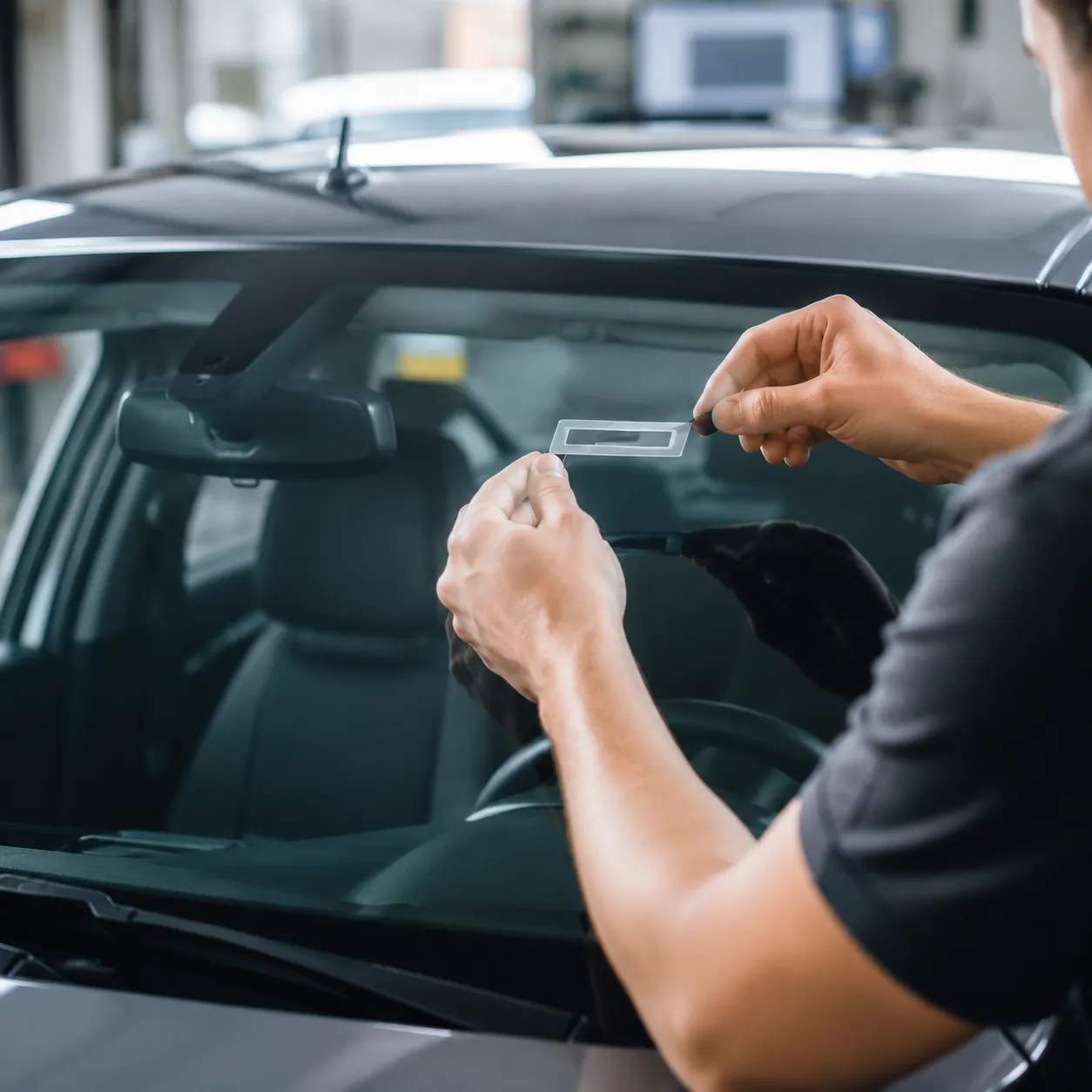
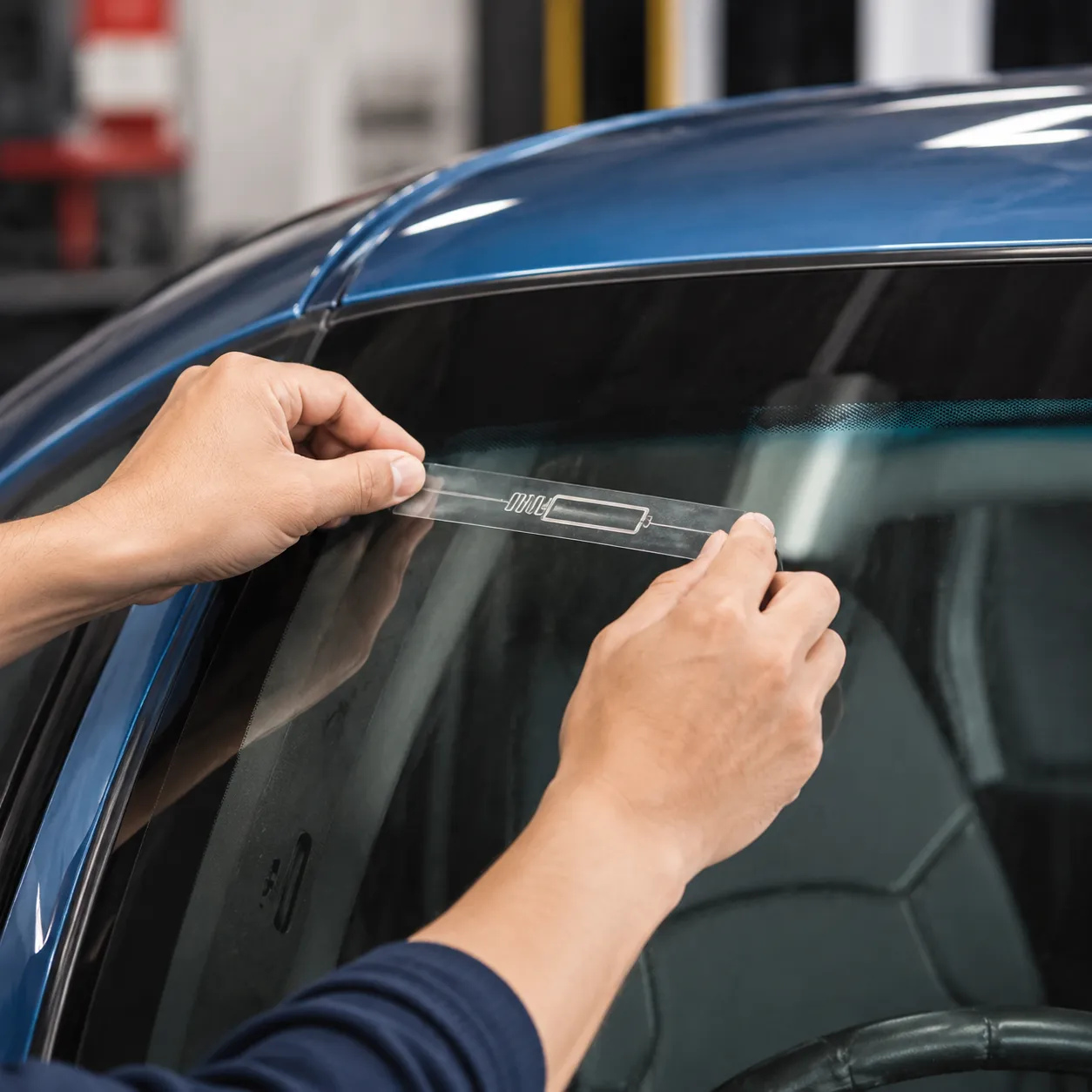
Proper installation ensures our 860mhz - 960mhz uhf rfid windshield tag number printing labeling delivers maximum read range and long-term durability. Follow these three steps for glass preparation, placement, and system validation.
Glass Surface Cleaning
A clean surface guarantees a strong, lasting bond with our high-tack adhesive. Dirt, grease, and glass film can weaken the bond over time.
- Clean the Glass: Wipe the target interior area with an isopropyl alcohol (70% IPA) pad or residue-free glass cleaner.
- Dry Completely: Use a clean, lint-free microfiber cloth to remove all moisture and residual film.
- Avoid Contact: Keep fingers off the cleaned installation spot to prevent oil transfer.
Optimal Tag Placement and Interference
Metallic windshield coatings, solar-control films, and embedded radio antennas can reflect or block UHF radio waves. Strategic placement keeps your long range RFID vehicle identification working at peak efficiency.
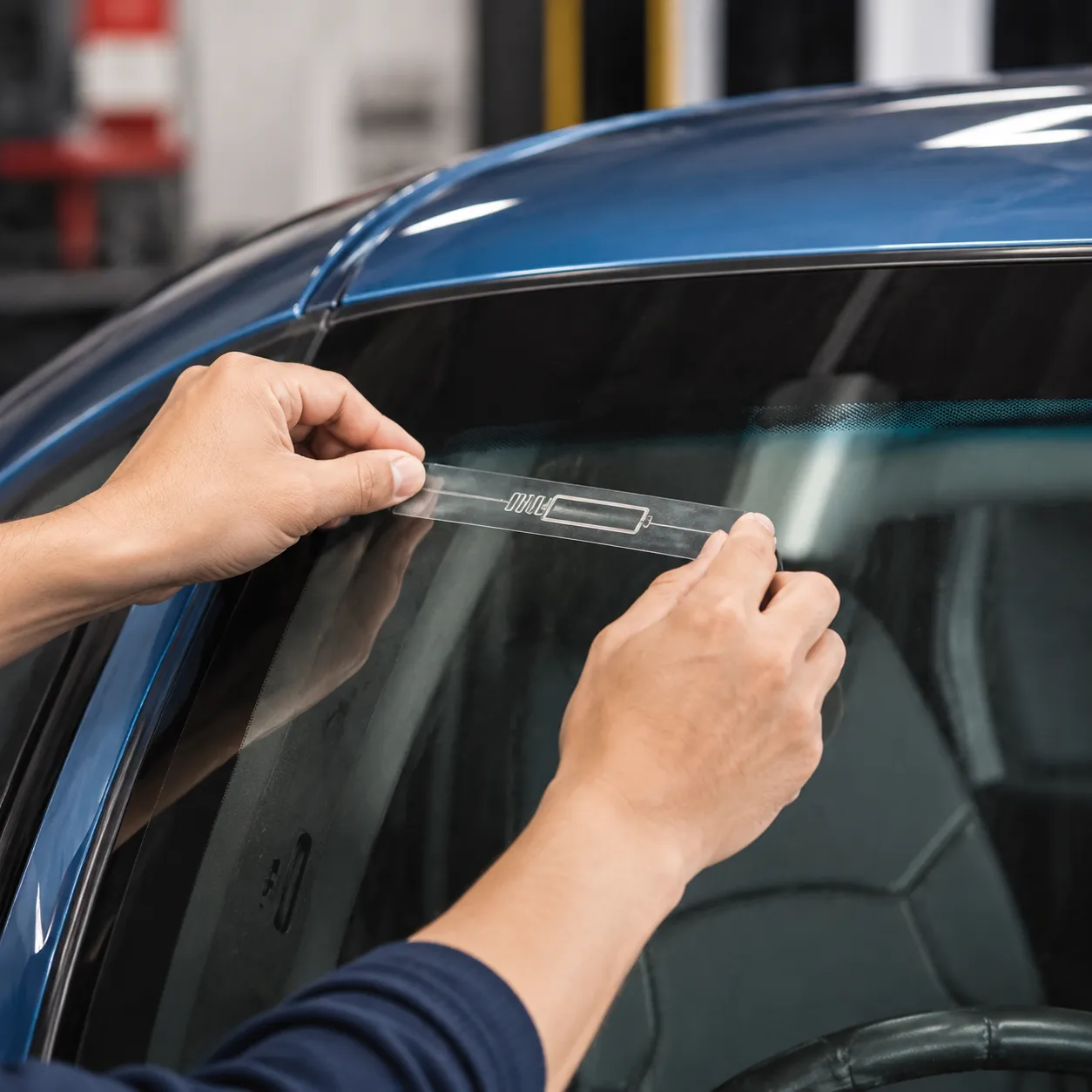
- Target the Cutout Area: Place the passive windshield RFID sticker inside the top-center area near the rearview mirror, where metallized anti-glare coatings are usually absent.
- Maintain Clearance: Keep the label at least 2 inches away from metal frame edges, windshield wiper paths, and dashboard trim.
- Apply Firmly in One Pass: Press the anti-tamper windshield tag evenly against the glass. Once the pressure-sensitive adhesive contacts the glass, do not peel or reposition the label.
Testing Read Rates and Scanner Alignment
After mounting, verify that your reader hardware registers the tag correctly under real operational conditions.
- Lane Verification: Drive the vehicle past your gate or overhead reader at normal access speeds to confirm reliable reads.
- Adjust Antenna Angles: Fine-tune the tilt or angle of your reader antenna if the detection zone feels too narrow or delayed.
- Database Check: Verify that the scanned chip ID matches your custom barcode RFID label and sequential human-readable numbers in your access control system.
Frequently Asked Questions About UHF RFID Windshield Tags
Direct answers on UV printing, tinted glass reads, tamper features, and lead times for 860mhz - 960mhz uhf rfid windshield tag number printing labeling rollouts.
| Question | Answer |
|---|---|
| UV-Resistant Number Printing in Direct Sunlight | No, our custom printing will not fade under harsh sunlight. Advanced thermal transfer RFID printing paired with UV-resistant coatings on durable PET material. Whether your fleet operates in intense desert heat or humid coastal environments, your custom barcode printing, logos, and sequential number printing remain clear and readable for years. |
| UHF Signal Performance on Tinted Glass | Standard, non-metallic solar window tints do not interfere with 860MHz - 960MHz UHF RFID windshield tag performance. These passive windshield RFID stickers with high-sensitivity Alien H3 chips to ensure a long read range through most factory glass treatments.
Reader antenna tilt and gate geometry strongly affect reads through metallic tint zones; validate placement during pilot drives. |
| Anti-Tamper and Destructive Removal Features | Yes, every tamper-evident RFID windshield label is strictly non-transferable. Precision safety die-cuts into the antenna layer during manufacturing.
|
| MOQ and lead time for custom windshield tags | Standard 860mhz - 960mhz uhf rfid windshield tag number printing labeling runs start from 1,000 units. Sample proofs ship in 5–7 business days; mass production completes in 2–4 weeks. Send gate layout and number sequence samples via Contact JN RFID for pre-encoded 860mhz 960mhz uhf rfid windshield tag number printing labeling proofs. |