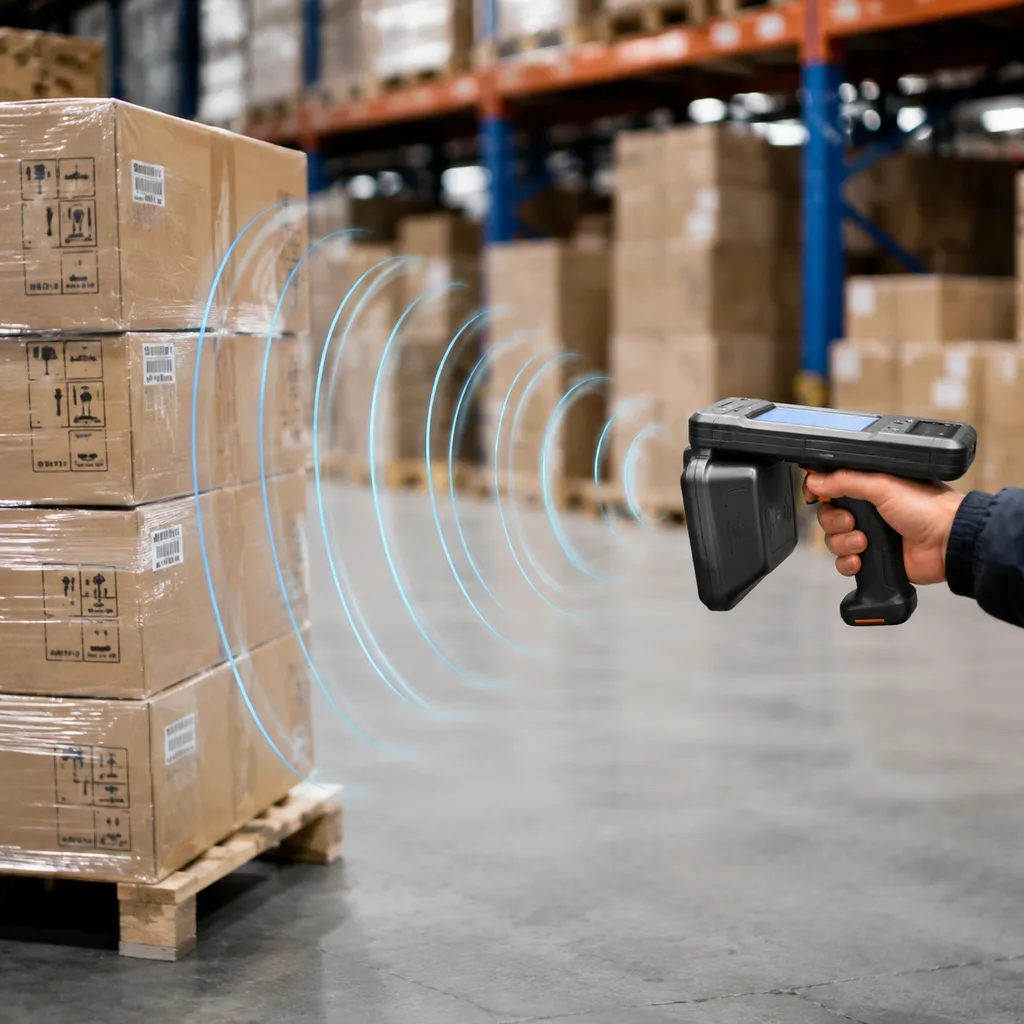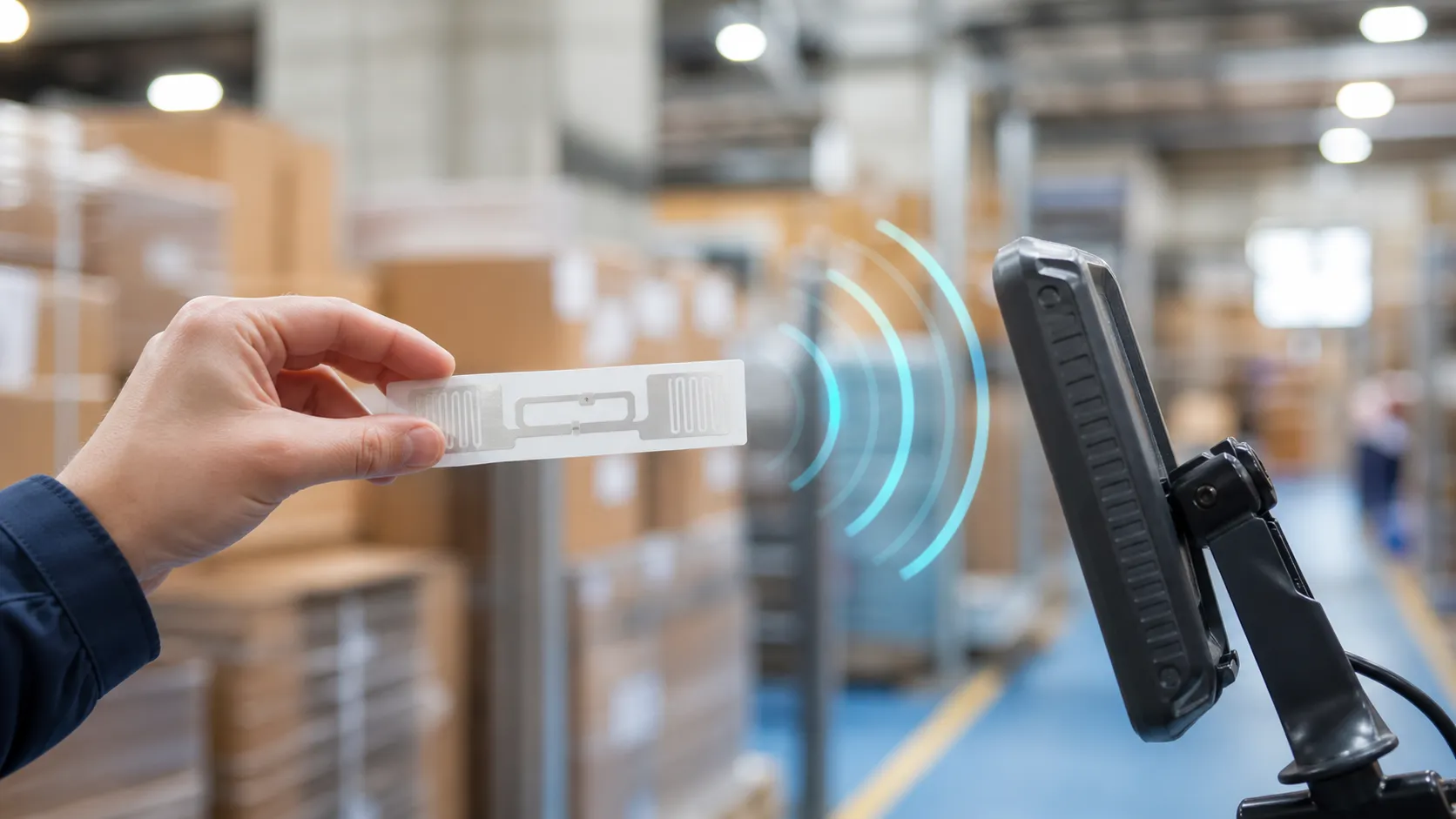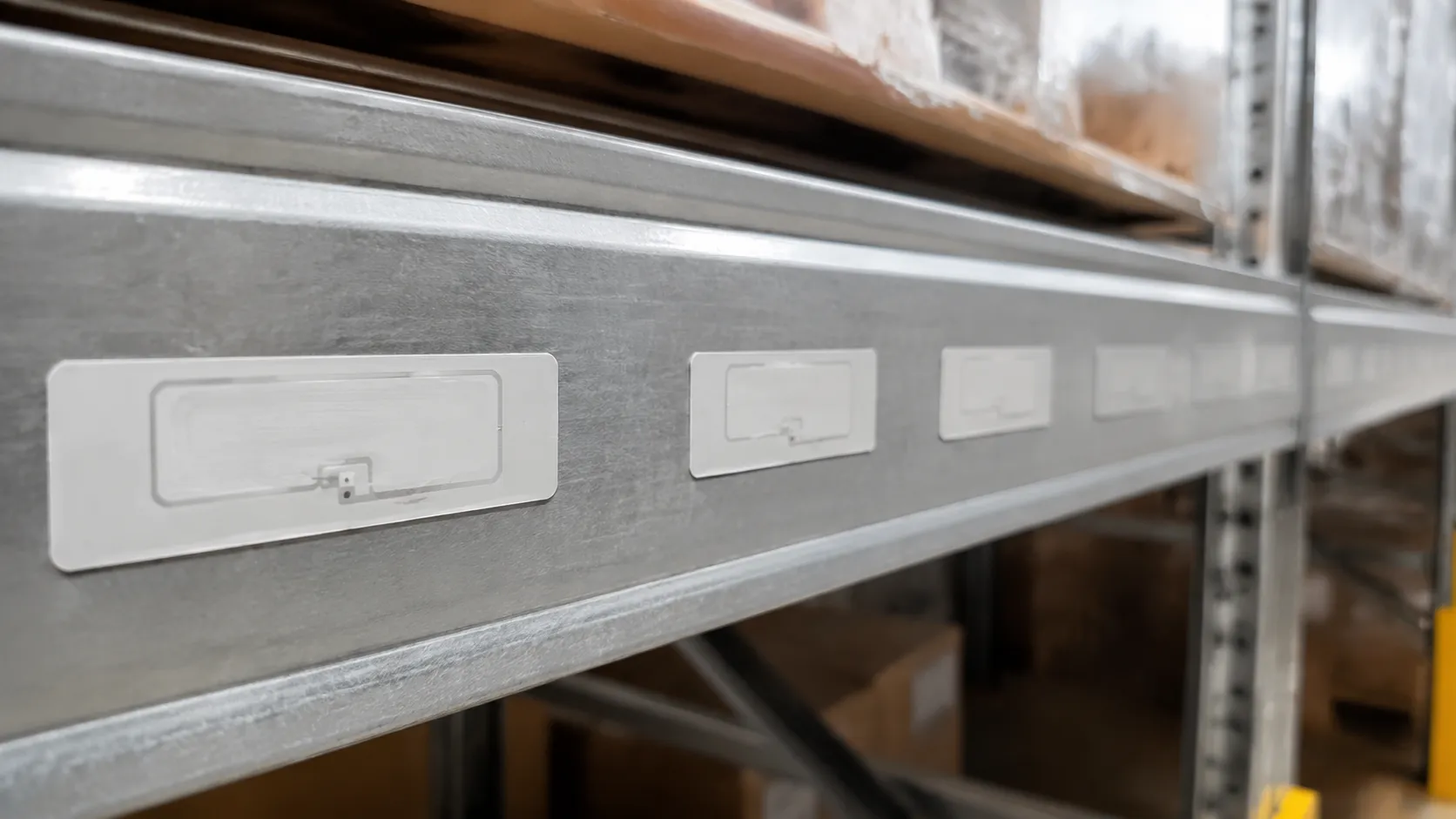
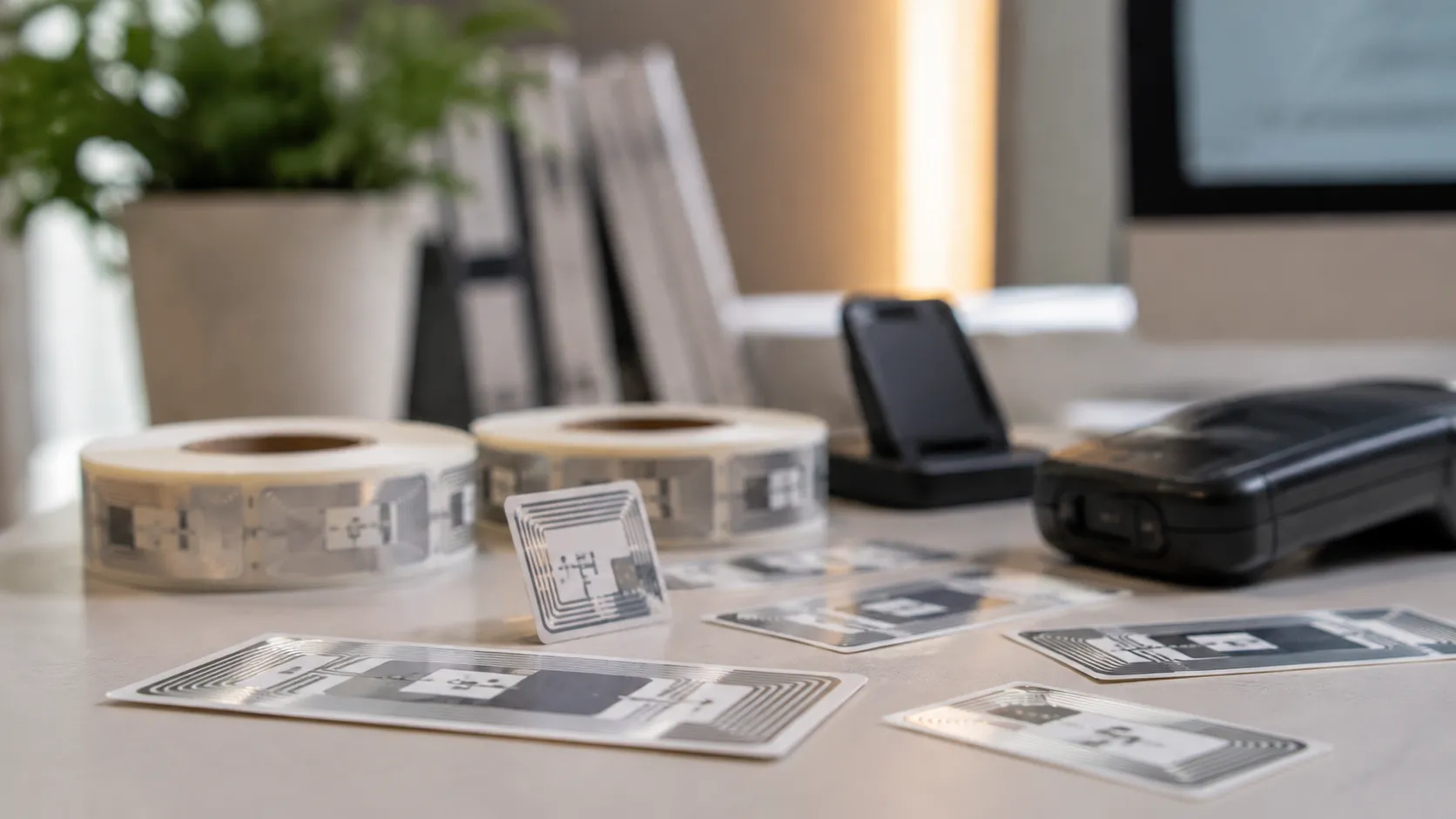
Finding the best tags for uhf rfid starts with matching form factor to where the tag will live—not chip brand alone.
| Your situation | Start here |
|---|---|
| Flat boxes, apparel, retail inventory | Printable paper labels / wet inlay |
| Metal racks, machinery, IT assets | On-metal tags / rugged hard tags |
| Outdoor, chemicals, heavy impact | IP68-rated hard tags for harsh environments |
| Converter / laminate workflow | Dry inlay for custom rfid labels |
Later sections cover RAIN RFID band tuning, read range factors, metal RFID tags, and B2B sampling timelines.
Best Tags for UHF RFID: Technical Foundations & Performance
When you are deploying a RAIN RFID system[2], your entire operation relies on how fast and accurately your readers can talk to your tags. High performance in the frequency 860-960 MHz range[2] does not happen by accident.
We design our passive RFID tags to maximize energy transfer, ensuring you get rapid bulk scanning capabilities and reliable long range tracking.
The Anatomy of a High-Quality Tag
A reliable UHF RFID tag is a three-part system engineered to survive real-world deployment while maintaining peak sensitivity.
- Antenna Design: The custom aluminum or copper etched pattern that captures RF energy from the reader. The antenna design dictates the tag's orientation sensitivity and overall read range.
- Silicon Chips: The integrated circuit (IC) that processes commands, stores data, and modulates the backscatter signal.
- Carrier Substrates: The foundational layer—usually thin PET plastic—that holds the antenna and chip together safely.
Inlay Selection Criteria: Choosing Your Form Factor
Choosing the right types of uhf rfid tags depends entirely on your conversion process and your application environment.
| Tag Type | Physical Characteristics | Best Used For |
|---|---|---|
| Dry Inlay | Antenna + chip on a continuous PET film loop; no adhesive. | Supply chain converters who laminate them into custom rfid labels. |
| Wet Inlay | Clear inlay with a clear face layer and live pressure-sensitive adhesive. | Immediate peel-and-stick application or conversion into smart packaging. |
| Printable Paper Labels | White paper or synthetic face sheet covering a wet inlay; thermal printable. | Asset tracking, retail inventory, box-level logistics, and barcode printing. |
| Rugged Hard Tags | Encapsulated in heavy-duty ABS, polycarbonate, or silicone housings. | Harsh environments, heavy machinery, outdoor tracking, and metal RFID tags. |
The Silicon Engine: Impinj & Alien Chips
The chip inside your tag is the brain of your entire tracking system. We use authentic Impinj & Alien chips because their advanced architecture dictates superior performance in the field.
These premium silicon engines provide the high tuning sensitivity required for multi-tag reading across long distances. Furthermore, they support high-speed encoding on the manufacturing floor, allowing automated print-and-apply systems to write data to thousands of tags per minute without data drops or missing packets.
Memory Configuration Profiles
Balancing your data storage requirements ensures faster processing times during bulk scanning. UHF RFID memory is divided into distinct functional banks:
- EPC (Electronic Product Code): The primary writable memory bank used for your unique item tracking number. Optimizing EPC size keeps your inventory scans incredibly fast.
- TID (Tag Identifier): Factory-locked, unalterable silicon serialization used for absolute authentication and anti-counterfeiting protection.
- User Memory: Extended memory banks reserved for offline data storage, such as batch numbers, expiration dates, or maintenance logs.
Best UHF RFID Tags for Metal, Liquid & Harsh Environments
Deploying RAIN RFID in real-world US industrial environments means facing physical interference head-on. Standard passive RFID tags often fail when applied directly to challenging surfaces or exposed to extreme weather. To maintain a reliable read range, we engineer specialized solutions that bypass these environmental roadblocks.
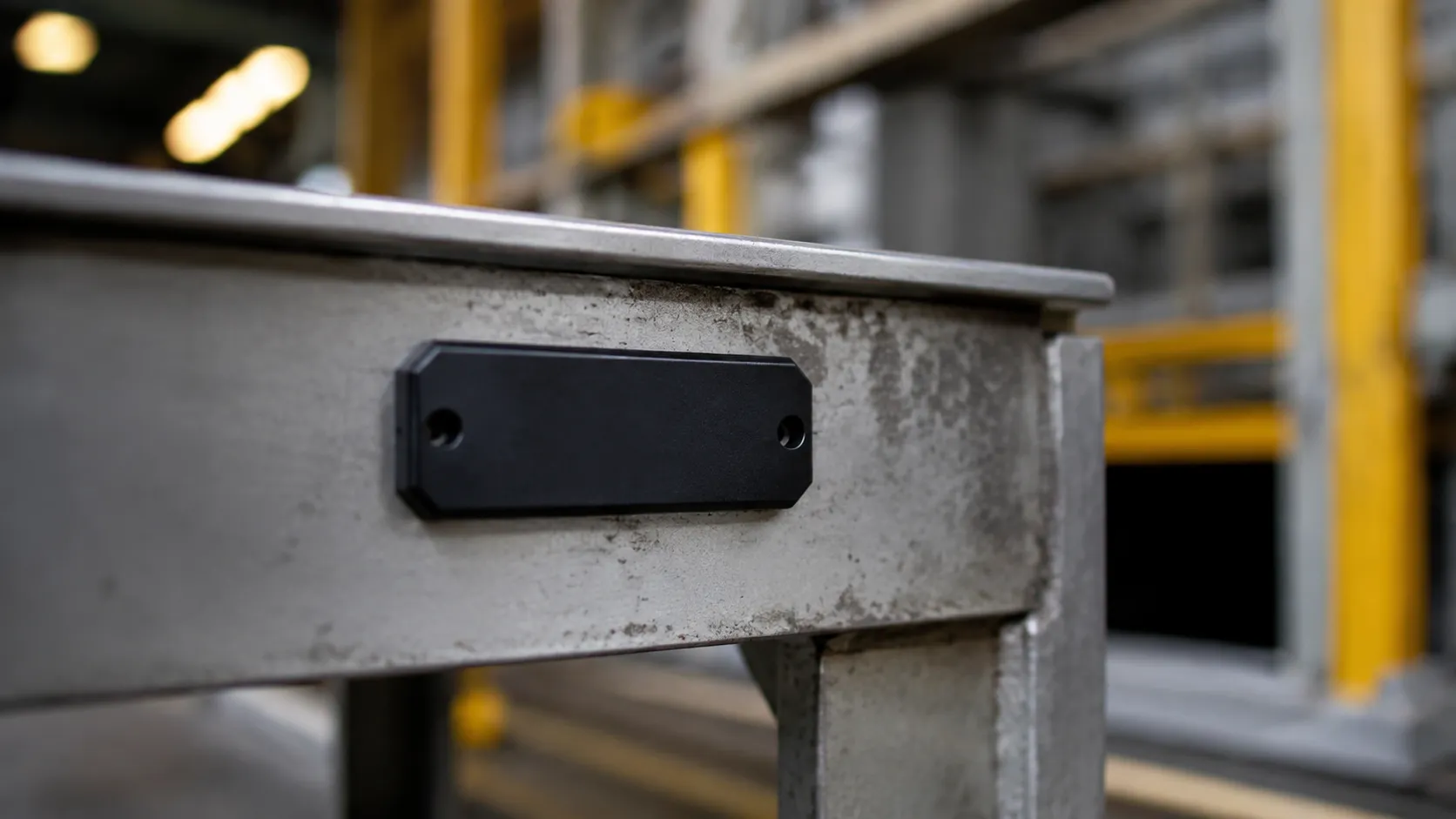
The On-Metal & Anti-Liquid Dilemma
Standard antenna designs detune completely when placed on metallic surfaces or near liquids, reflecting the RF signal and killing your tracking capabilities. If you are tracking IT assets, machinery, or liquid containers, standard labels won't work.
You need specialized metal RFID tags. We design these on-metal tags with a built-in physical spacer or a specialized microstrip antenna design. This isolation ensures the tag leverages the metal surface rather than fighting it, maintaining an optimal frequency of 860-960 MHz[2] for consistent long range tracking.
Managing RF Interference and Card Clash
When hundreds of UHF RFID labels pass through a reader portal simultaneously, signal collision and card clash can stall your data collection. We solve this through precise structural tag spacing and advanced antenna gain tuning.
- Proper Spacing: Prevents adjacent antennas from coupling and detuning each other.
- Reader Optimization: We configure tag sensitivity to match your specific reader power, ensuring clean multi-tag reading during high-speed bulk scanning.
Surviving Harsh Environments
Industrial asset tracking requires hardware that can take a beating. From hot manufacturing lines to freezing outdoor shipping yards, our heavy-duty hard tags are built to survive.
| Environmental Stress | Our Engineering Solution | Target Application |
|---|---|---|
| Extreme Heat & Chemicals | High-grade ceramic and PPS housings | Manufacturing & Tool tracking |
| Moisture & Heavy Impact | IP68-rated housing | Outdoor logistics & Heavy equipment |
| Peeling & Weathering | Premium, industrial-grade weather-resistant adhesives | Windshield & Pallet tracking |
Choosing the Right Tag for Your Industry Application
Finding the best tags for uhf rfid deployment depends entirely on your specific environment. Different industries face unique physical obstacles, which is why we engineer application-specific passive RFID tags to maximize read rates and durability.

Logistics & Supply Chain Management
High-volume supply chains require rapid bulk scanning and reliable long range tracking. We design high-performing rfid labels that maintain consistent readability across turbulent transit routes.
- Pallet & Container Tracking: Optimized for rapid forklift drive-through scanning and automated inventory logging.
- Windshield Tracking: Specialized designs for fleet management and automated vehicle access control.
- RAIN RFID Efficiency: Ensures accurate tracking of mixed shipments across the entire logistics loop.
IT Asset Tracking & Retail Inventory
Indoor corporate and retail spaces demand discreet, high-density multi-tag reading capabilities to track expensive assets and high-turnover inventory without missing a single item.
| Application | Tag Type Used | Key Benefit |
|---|---|---|
| IT Servers & Laptops | Flexible on-metal tags | Prevents signal detuning on dense metallic server racks. |
| Retail Apparel | Hang tags & uhf rfid labels | Enables instant box-level inventory counts without line of sight. |
| Cosmetics & Small Items | Flag labels | Isolates the antenna from liquids to ensure a stable read range. |
Industrial & Manufacturing
Harsh factory floors require heavy-duty physical protection. Standard stickers fail under extreme stress, making specialized hard tags an absolute necessity for industrial asset tracking.
- High-Temperature Tracking: Built to survive paint curing ovens, autoclaves, and thermal sterilization cycles.
- Heavy Equipment: Encased in IP68-rated hard tags to resist high impact, chemical exposure, and outdoor weathering.
- On-Metal Optimization: Engineered specifically for heavy machinery, steel beams, and metallic components operating in the frequency 860-960 MHz spectrum.
Factory-Direct UHF RFID Tag Manufacturing & Quality Control
Choosing the best tags for UHF RFID deployments means looking beyond basic specs—you need a reliable supply chain. At JN RFID, we remove procurement friction by controlling every step of the manufacturing process, delivering high-performance RAIN RFID solutions directly to your warehouse.

Factory-Direct vs. Third-Party Trading Companies
- Direct Engineering Support: Work straight with the team designing your passive RFID tags to customize antenna layouts or housing materials.
The Zero-Defect Strategy
A single bad tag can disrupt your entire asset tracking workflow. That is why we enforce a strict testing standard across our lines:
| Quality Control Feature | How It Helps Your Project |
|---|---|
| 100% Electronic Verification | Every tag undergoes automated read/write functional testing before shipping. |
| High-Speed Encoding Validation | Ensures serialized data, EPC memory, and TID information match your exact specs. |
| Zero Blind Spots | Prevents dead UHF RFID labels from entering your supply chain. |
Production Muscle & Compliance
Scaling up your operations requires a manufacturing partner that can handle massive volume without dropping quality.
- 100M+ Annual Production Capacity: Built to support large-scale enterprise deployments without supply delays.
- ISO 9001:2015 Certified Cleanrooms: Manufactured in strictly controlled environments to ensure structural integrity and consistent read range.
- Global Standard Compliance: Operating on the standard frequency 860-960 MHz band[2] to meet worldwide industrial requirements.
B2B Procurement and Sampling Timelines
Buying the best tags for uhf rfid deployment shouldn't be a guessing game. We streamline your procurement process from initial testing to full-scale rollout, ensuring you get the exact passive RFID tags your project demands without the usual supply chain headaches.

Proof-of-Concept Testing
We provide free stock evaluation samples so your team can run real-world proof-of-concept tests before committing capital.
- Antenna Gain Verification: Test how our RAIN RFID tags perform under your specific warehouse or store conditions.
- Reader Compatibility: Ensure seamless data capture with your existing fixed readers and handheld scanners.
- On-Site Validation: Check read ranges and bulk scanning accuracy directly on your inventory.
Flexible Project Scalability
We match our production to your business growth. Navigating minimum order quantities (MOQs) depends entirely on the form factor you choose:
| Tag Type | MOQ Structure | Best Used For |
|---|---|---|
| Wet Inlay & Dry Inlay | High volume, low MOQ thresholds | High-speed encoding, roll-form labeling |
| UHF RFID Labels | Flexible scaling | Retail, apparel, and standard logistics |
| Rugged Hard Tags | Scaled to specific industrial project needs | On-metal applications, harsh environments |
Engineering Timelines
We keep your deployment on schedule with predictable, transparent engineering timelines. We move fast so you can hit your go-live targets.
- Custom Prototyping: 1–2 weeks for specialized antenna design and custom form factors.
- Sample Sign-Off: Rapid dispatch of working prototypes for final client approval.
- Mass Bulk Production: 2–4 weeks from final sign-off to factory-direct shipment, depending on volume.
Frequently Asked Questions About UHF RFID Tags
What is the typical read range of a passive UHF RFID tag?
Under standard conditions, a passive RFID tag operating in the frequency 860-960 MHz range offers a read range of 3 to 15 meters (10 to 50 feet)[1]. The exact distance depends on the antenna design, reader power, and environmental interference.
Can I use passive RFID tags on metal surfaces?
Standard dipoles fail on metal, but specialized metal RFID tags (or on-metal tags) solve this problem. We design these with a built-in insulator shield to prevent the metal from detuning the signal, ensuring reliable asset tracking in industrial settings.
What is the difference between wet inlay vs. dry inlay?
| Feature | Dry Inlay | Wet Inlay |
|---|---|---|
| Components | IC (Chip) + Antenna on a carrier web | IC + Antenna + Adhesive backing + Clear liner |
| Usability | Cannot be stuck directly to items; needs converting | Ready to apply immediately as a wet inlay sticker |
| Best For | Manufacturers making complex UHF RFID labels | Direct application for rapid asset tracking deployment |
How do Impinj and Alien chips compare for long range tracking?
Both brands lead the RAIN RFID industry, but they excel in different areas:
- Impinj Chips: Known for industry-leading sensitivity and high-speed encoding. They deliver excellent performance for dense multi-tag reading and automated bulk scanning.
- Alien Chips: Highly optimized for consistent long range tracking and robust memory retention, making them a staple for rugged logistics and outdoor tracking.
How do harsh environments affect UHF RFID labels?
Extreme temperatures, moisture, and chemicals can degrade standard labels, detune antennas, or destroy adhesives. For harsh environments, we wrap our high-performance chips inside IP68-rated hard tags to ensure 100% data integrity under severe physical stress.